It's ideal for students in business, marketing, or entrepreneurship programs, as well as professionals seeking to understand the drivers of digital business success.

E-Commerce Simulation
In this E-Commerce Simulation, participants build, launch, and scale an online store in a competitive market, making decisions on product strategy, digital marketing, supply chain, and financial management to achieve sustainable growth and profitability.

E-Commerce Simulation Overview
Participants immerse themselves in the fast-paced world of online retail by managing their own e-commerce venture. Each round represents a critical business cycle, introducing real-world challenges such as shifting consumer trends, supply chain disruptions, marketing channel saturation, and aggressive moves by competing stores.
They must analyze market data, allocate budgets across acquisition channels, optimize their product portfolio and pricing, manage inventory and fulfillment, and interpret financial statements to guide investment. The simulation emphasizes data-driven decision-making and strategic agility, blending analytical skills with customer-centric thinking.
This simulation is ideal for university business programs, digital marketing courses, and corporate training workshops for professionals in retail, marketing, and entrepreneurship. It makes the complexities of running a digital business tangible, demonstrating how marketing, operations, finance, and strategy are interconnected in the quest for e-commerce success.

E-Commerce Simulation Concepts
Participants work through realistic scenarios, which can be customized to emphasize or exclude specific topics depending on the learning goals. This modular structure allows the simulation to be tailored to any type of session. Key concepts include:
- Market analysis and customer segmentation for e-commerce
- Digital marketing strategy and channel allocation
- Customer Acquisition Cost and Lifetime Value optimization
- Product portfolio management and pricing strategy
- Inventory management, logistics, and supply chain fundamentals
- E-commerce financials: P&L, cash flow, and key performance indicators
- Website conversion rate optimization and user experience
- Competitive analysis and strategic positioning in a digital landscape

Gameflow
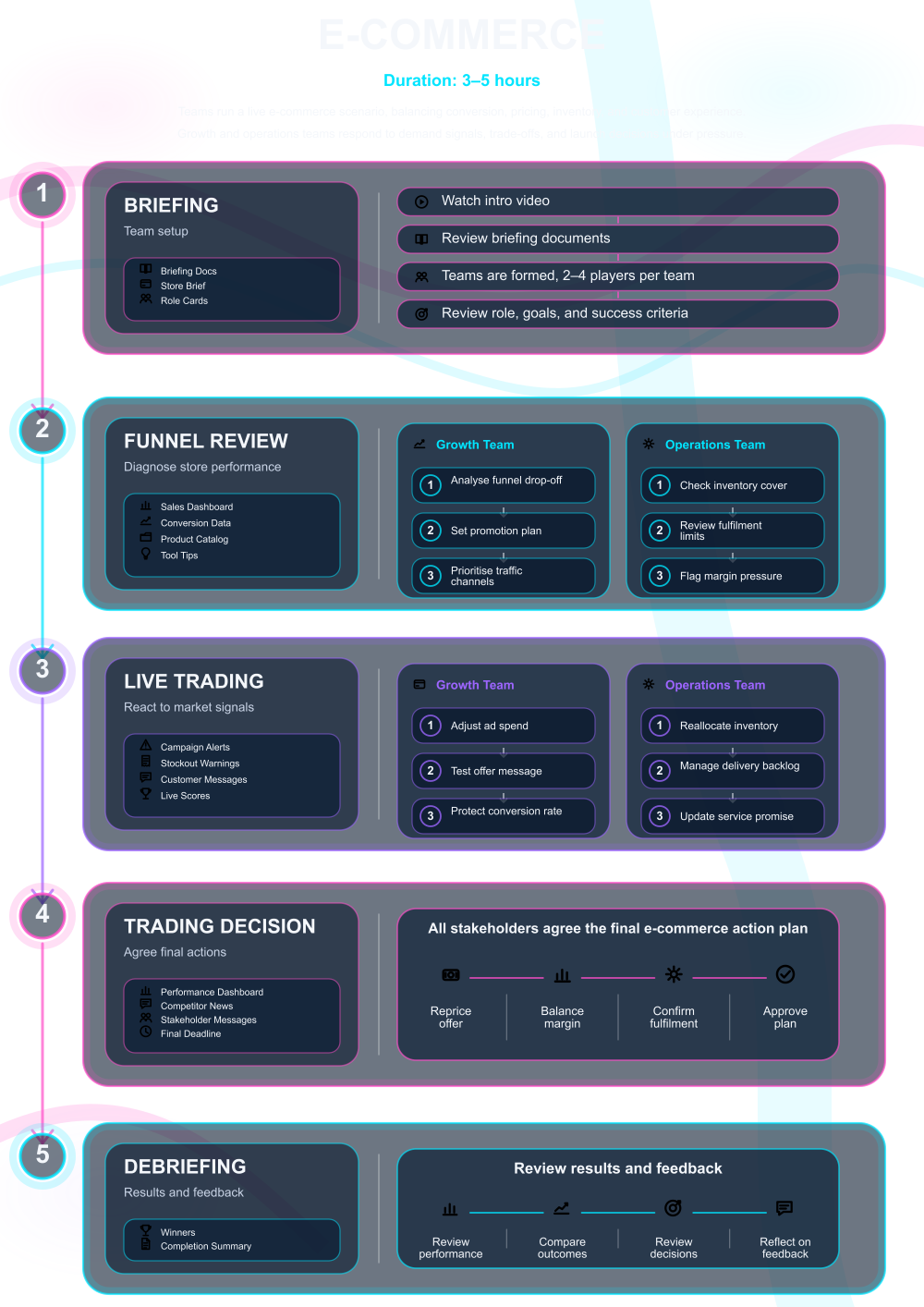

What Participants Do
In the simulation, participants will:
- Analyze market research and competitor data to identify opportunities.
- Develop and execute a multi-channel digital marketing plan within a set budget.
- Select products, set prices, and manage inventory levels to meet forecasted demand.
- Allocate resources to improve website functionality and customer experience.
- Interpret financial dashboards to assess profitability and adjust strategy.
- Present their business strategy and results to potential "investors" or stakeholders.

Learning Objectives
By the end of the simulation, participants will be able to:
- Understand the core operational and strategic components of an e-commerce business.
- Formulate an integrated digital marketing strategy balancing brand building and performance marketing.
- Apply financial principles to manage budgets, calculate unit economics, and drive profitability.
- Make data-informed decisions to optimize product assortment, pricing, and inventory.
- Analyze competitive dynamics and adapt business strategy accordingly.
- Communicate a coherent business strategy and performance results effectively.
How the E-Commerce Simulation Works
This simulation can be run individually or in teams in academic or corporate contexts. Each cycle represents a stage of getting through a pressing financial situation.
1. Receive the Business Brief Participants are introduced to their company's starting position, market data, and initial capital.
** 2. Analyze the Landscape** They review competitive intelligence, customer analytics, and financial reports from the previous period.
3. Make Strategic Decisions Teams allocate their budget, plan marketing campaigns, set prices, order inventory, and approve website improvements.
4. Collaborate and Compete Teams debate priorities, may form partnerships, and react to the market moves of other participant teams.
5. Review Round Results The simulation processes all decisions, generating updated market share, financial statements, and performance metrics.
6. Adapt and Advance Based on feedback, participants refine their strategy for the next round, learning from both successes and setbacks.
Frequently Asked Questions
Assessment
Assessment of participant performance can be tailored according to the host institution’s objectives (business school, corporate training, assessment centre). Typical assessment criteria include:
- Financial health and profitability of their virtual business.
- Effectiveness and ROI of their digital marketing strategy.
- Operational efficiency in inventory and supply chain management.
- Coherence and persuasiveness of their strategic business presentations.
- Ability to adapt strategy based on data and market feedback.