It's a strategy where a company borrows money specifically to pay a large cash dividend to its owners (like a Private Equity firm), effectively taking cash out of the company using debt.

Dividend Recapitalization Simulation
This immersive simulation places participants in the role of a Private Equity firm analyzing a portfolio company to execute a dividend recapitalization. Master the Art of Leveraging Portfolio Companies for Shareholder Returns.

Dividend Recapitalization Simulation Overview
A dividend recapitalization, or "dividend recap," is a pivotal financial strategy where a company takes on new debt to pay a special dividend to its private equity owners. It is a high-stakes maneuver that tests a firm's understanding of leverage, capital structure, and portfolio management.
In this hands-on simulation, participants step into the shoes of an investment team at a leading Private Equity firm. Your portfolio company is a mature and cash-flow-positive business, and is a prime candidate for a recap. You will be tasked with modeling the transaction, assessing the risks, and making a final recommendation to the Investment Committee. You'll analyze the impact on key financial metrics, debt covenants, and the company's ability to sustain operations and growth post-transaction.
Although ideal for undergraduate and graduate finance courses, executive training, and corporate finance skill workshops, the simulation is modular and scalable, allowing instructors to vary complexity.

Dividend Recapitalization Simulation Concepts
Participants work through realistic scenarios, which can be customized to emphasize or exclude specific topics depending on the learning goals. This modular structure allows the simulation to be tailored to any type of session. Key concepts include:
- Dividend Recapitalization Mechanics
- Leveraged Finance and Debt Structuring
- Capital Structure Optimization
- Leveraged Buyout Model Refresher
- Debt Covenants and Credit Agreements
- Credit Ratios
- Free Cash Flow Analysis
- Private Equity Portfolio Strategy
- Risk-Return Trade-off
- Financial Distress and Solvency Analysis

Gameflow
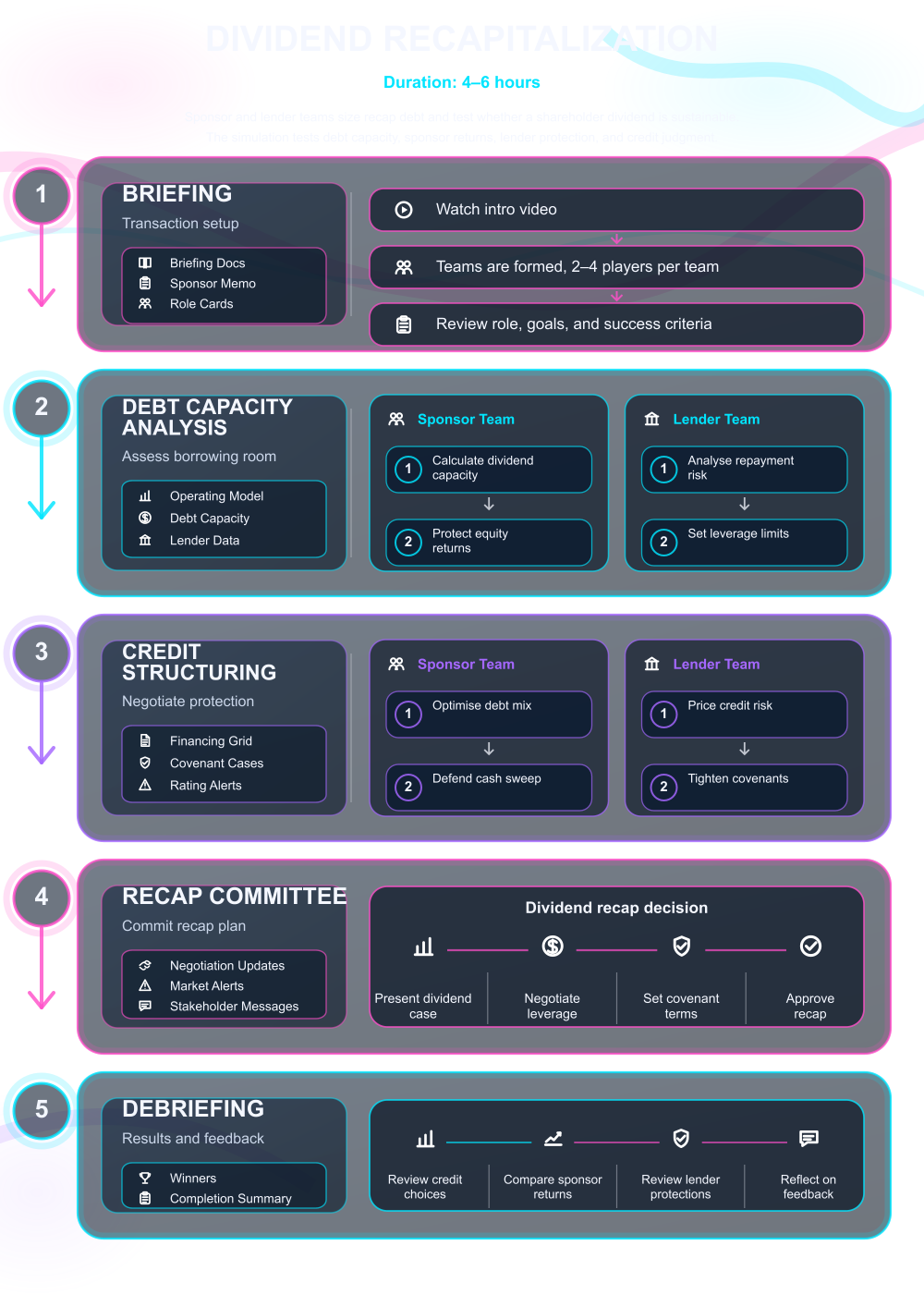

What Participants Do
In the simulation, participants will:
- Analyze the historical and projected financials of your portfolio company.
- Structure a new debt package, choosing between senior loans, high-yield bonds, and unitranche facilities.
- Model the pro-forma impact of the recapitalization on the company's balance sheet and income statement.
- Calculate and stress-test key credit ratios and debt covenants post-transaction.
- Assess the return profile for the private equity fund and the impact on the holding's IRR.
- Evaluate the risks of increased leverage, including sensitivity to economic downturns and interest rate hikes.
- Prepare and present a final investment memorandum to the "Investment Committee" (instructors or peers) justifying the decision to proceed or abstain.

Learning Objectives
By the end of the simulation, participants will be able to:
- Explain the strategic rationale and potential pitfalls of a dividend recapitalization from both the private equity and portfolio company perspectives.
- Structure a dividend recap transaction, selecting appropriate debt instruments and sizing the dividend.
- Build a dynamic financial model to project the pro-forma impact of a recap on a company's financial health.
- Interpret debt covenants and analyze a company's ability to comply with them under various scenarios.
- Quantify the return impact for equity sponsors and assess the risk-return profile of the transaction.
- Synthesize complex financial data into a coherent recommendation for key stakeholders.
How the Dividend Recapitalization Simulation Works
This simulation can be run individually or in teams in academic or corporate contexts. Each cycle represents a stage of getting through a pressing financial situation.
1. Introduction and Case Brief Participants receive the case study for your portfolio company, including its business model, historical financials, and the Private Equity fund's investment thesis.
2. Financial Analysis Using the provided simulation dashboard and models, participants analyze the company's current cash flow generation and debt capacity.
3. Transaction Structuring Participants choose the type and amount of debt to issue. The simulation platform provides real-time feedback on the resulting credit metrics.
4. Pro-Forma Modeling Participants run the transaction model to see the immediate and projected effects. This includes calculating the new leverage ratio, interest coverage, and the size of the dividend payout.
5. Risk and Sensitivity Analysis Participants test their proposed structure against various "what-if" scenarios, such as a 10% revenue decline or a 200-basis-point interest rate increase.
6. Final Recommendation Participants submit a detailed report or presentation outlining their analysis, proposed transaction structure, and a final "Go / No-Go" decision.
Frequently Asked Questions
Assessment
Assessment of participant performance can be tailored according to the host institution’s objectives (business school, corporate training, assessment centre). Typical assessment criteria include:
- Correct structuring of the transaction and accurate pro-forma financial projections.
- Depth of analysis on leverage, coverage ratios, and covenant compliance under base and stress cases.
- Clarity and strength of the argument for or against the recapitalization, linking financial data to strategic implications.
- Identification and quantification of key risks associated with the increased debt load.
- Professionalism, clarity, and defensibility of the final investment memorandum or presentation.