It is an interactive tool to forecast, calculate, and manage asset depreciation effects on financial reporting without immediate accounting impact.

Depreciation Simulation
Understand how different depreciation methods directly influence profitability, tax liability, cash flow, and key performance metrics in a dynamic, competitive business environment.

Depreciation Simulation Overview
The Depreciation Simulation is a powerful, experiential learning tool designed for finance professionals, accounting students, and corporate trainees. Participants manage a virtual company over multiple fiscal periods, making critical capital investment decisions. They must choose which assets to purchase, select the most advantageous depreciation method, and manage the subsequent financial reporting and tax implications.
The simulation brings to life the fact that depreciation is not just an accounting compliance task but a strategic lever. A well-chosen depreciation strategy can optimize net income, manage tax outflows, and present a stronger financial position to stakeholders. Through trial, error, and competition, learners gain an intuitive and unforgettable understanding of fixed asset accounting.
Although ideal for undergraduate and graduate finance courses, executive training, and corporate finance skill workshops, the simulation is modular and scalable, allowing instructors to vary complexity.

Depreciation Simulation Concepts
Participants work through realistic scenarios, which can be customized to emphasize or exclude specific topics depending on the learning goals. This modular structure allows the simulation to be tailored to any type of session. Key concepts include:
- Depreciation methods and models (straight-line, accelerated, fiscal value considerations)
- Fixed asset capitalizations and management
- Forecasting depreciation for current and planned assets
- Impact of depreciation on financial statements
- Asset residual and fiscal values considerations
- Simulation versus actual transaction confirmation
- Risk and financial planning involving asset depreciation

Gameflow
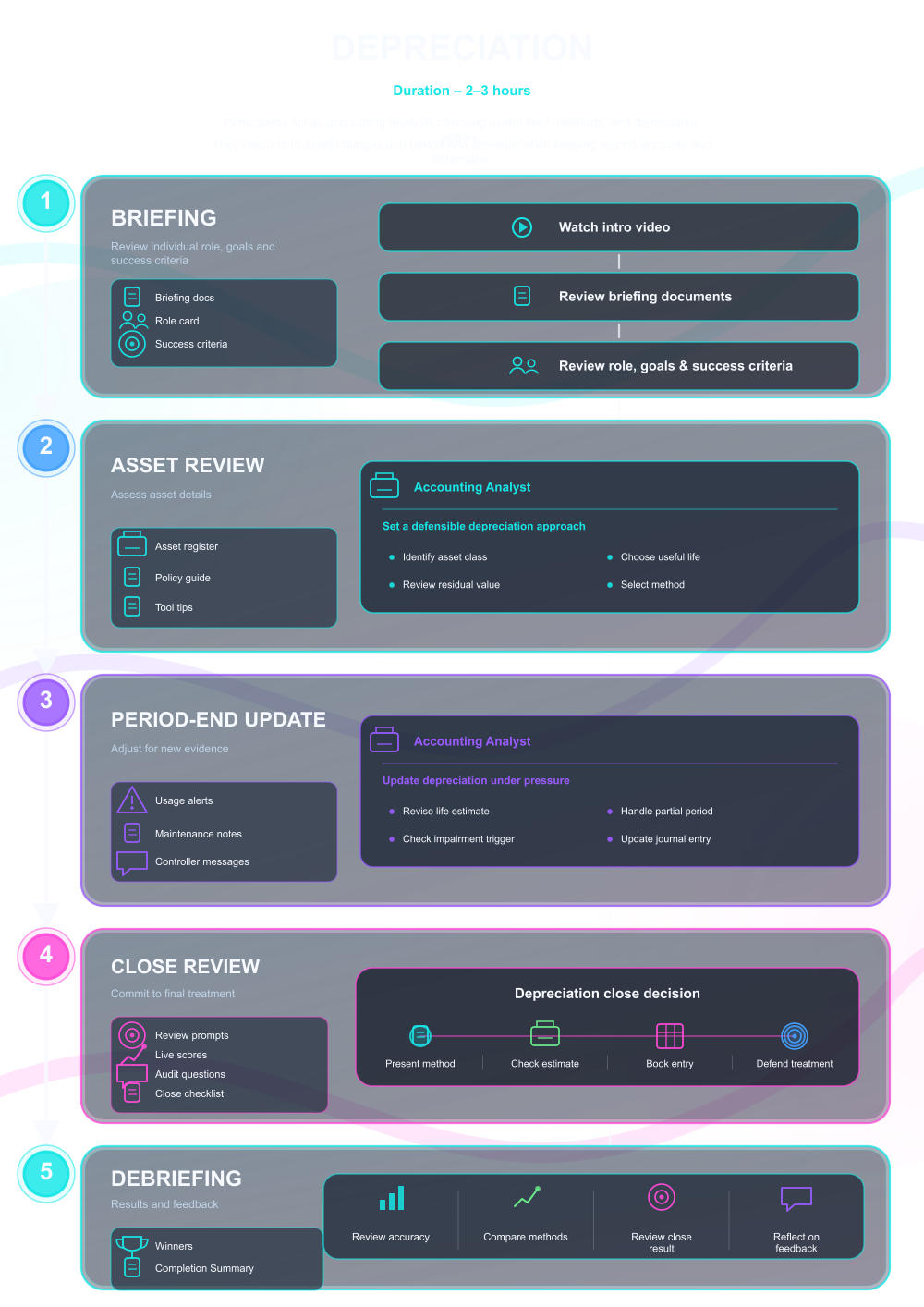

What Participants Do
In the simulation, participants will:
- Receive asset scenarios or briefs detailing asset values and expected depreciation timelines
- Analyze financial data including asset purchase values, fiscal data, and prior depreciation
- Simulate various depreciation outcomes and view effects on financial reports
- Make decisions on which depreciation model to apply and how to manage asset values
- Convert simulated depreciation results into actual accounting transactions after review
- Collaborate with team members acting as accountants, finance managers, or auditors
- Communicate and justify depreciation choices and their financial implications
- Reflect on simulation outcomes and adjust strategies in iterative rounds

Learning Objectives
By the end of the simulation, participants will be able to:
- Understand how depreciation influences corporate financial reporting and asset management
- Apply different depreciation methods appropriately to varied asset types
- Forecast depreciation impact on financial statements using simulation tools
- Manage fixed assets through their lifecycle with attention to fiscal and residual values
- Evaluate and confirm depreciation transactions to comply with accounting standards
- Improve decision-making skills under financial uncertainty related to asset management
- Appreciate the role of depreciation in broader financial planning and risk management
How the Depreciation Simulation Works
This simulation can be run individually or in teams in academic or corporate contexts. Each cycle represents a stage of getting through a pressing financial situation.
1. Team Formation and Introduction Participants are divided into management teams running competing companies. They receive initial capital and company objectives.
2. Decision Rounds Analyze the market and decide on capital investments, choose a depreciation method for each new asset, review automatically generated financial statements, manage operational decisions based on their financial results.
3. Competition After each round, a consolidated ranking is published based on key metrics like Net Income, ROA, and Cash Flow. This competitive element forces teams to adapt their strategies.
4. Instructor-Led Debrief After the final round, a comprehensive debriefing session led by the instructor connects the simulation experiences to core accounting and finance theories, solidifying the learning.
Frequently Asked Questions
Assessment
Assessment of participant performance can be tailored according to the host institution’s objectives (business school, corporate training, assessment centre). Typical assessment criteria include:
- Individual contribution and collaboration within the team, provided by fellow team members.
- Ranking based on key financial health indicators achieved by the end of the simulation
- Assessment of individual contribution and collaboration within the team
- Depth and logic of scenario analysis