This simulation is designed for MBA students, finance undergraduates, corporate finance professionals, and investment bankers seeking to deepen their practical understanding of debt capital markets.

Debt Issuance Simulation
Navigate the high-stakes world of corporate debt. Our Debt Issuance Simulation places you in the role of a corporate treasurer or investment banker, tasked with structuring, pricing, and issuing bonds to the market.

Debt Issuance Simulation Overview
In today's dynamic financial landscape, the ability to raise debt capital is a critical skill for any corporation. This simulation provides an immersive, hands-on experience in the complete debt issuance process. Participants will step into the shoes of a company's treasury team that needs to raise a significant amount of capital for expansion, an acquisition, or refinancing existing obligations.
You will be challenged to analyze your company's credit profile, assess market conditions, and make strategic decisions on the bond's structure—including maturity, coupon type (fixed vs. floating), and covenants. You will then work with investment bankers to price the bond, market it to institutional investors, and ultimately, succeed in a competitive book-building process. The simulation captures the tension and collaboration between the issuer, the investment banks, and the buy-side investors, providing a 360-degree view of the debt capital markets.
Although ideal for undergraduate and graduate finance courses, executive training, and corporate finance skill workshops, the simulation is modular and scalable, allowing instructors to vary complexity.

Debt Issuance Simulation Concepts
Participants work through realistic scenarios, which can be customized to emphasize or exclude specific topics depending on the learning goals. This modular structure allows the simulation to be tailored to any type of session. Key concepts include:
- Credit Profile and Rating Agency Interaction
- Debt Structuring
- Pricing and Spreads
- Yield-to-Maturity
- Covenants
- Bookbuilding Process
- Market Timing
- Investment Banking Syndicate

Gameflow
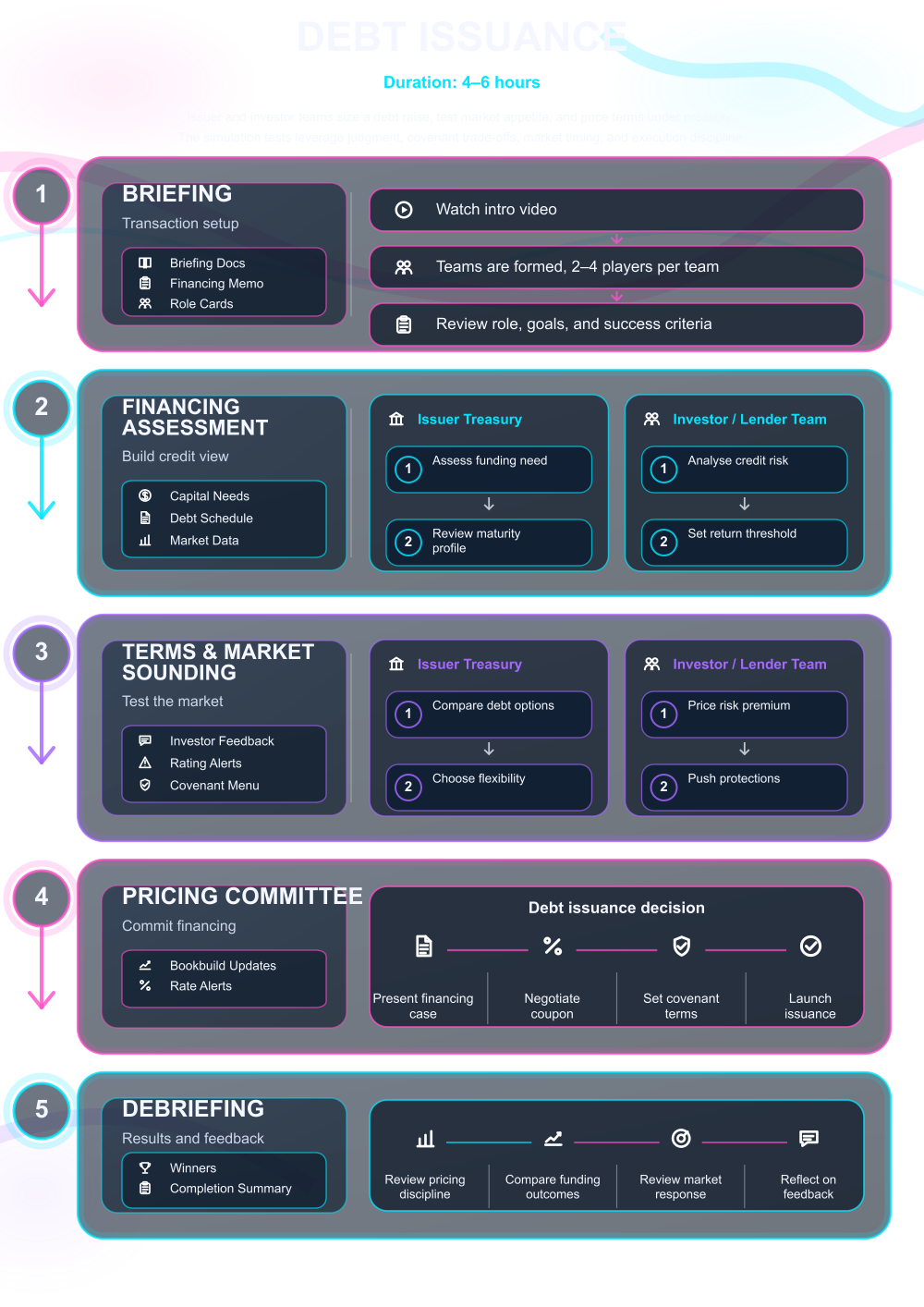

What Participants Do
In the simulation, participants will:
- Analyze the company's financial statements and strategic needs to determine the optimal amount and purpose of debt.
- Structure the bond offering, making critical decisions on maturity, coupon type, and callable features.
- Interact with a simulated credit rating agency to (hopefully) secure a favorable credit rating.
- Price the Bond by setting an initial price talk (credit spread) and adjusting it based on simulated investor feedback.
- Market the Deal by creating a "roadshow" presentation to pitch the bond's value to institutional investors.
- Manage the Bookbuilding process, monitoring orders from different investor types (pension funds, asset managers, etc.).
- Execute the Trade by setting the final coupon rate and allocating bonds to investors.
- Analyze the Outcome by calculating the final cost of debt and evaluating the success of the issuance against initial objectives.

Learning Objectives
By the end of the simulation, participants will be able to:
- Explain the strategic reasons for raising debt and the key stakeholders involved in the process.
- Evaluate the trade-offs between different debt instruments and structures.
- Calculate the all-in cost of debt for a corporation, including coupon and issuance costs.
- Develop a compelling investment thesis to market a bond to potential investors.
- Analyze investor demand and market conditions to optimally price a bond issue.
- Critique the terms of a bond indenture, including the impact of covenants.
How the Debt Issuance Simulation Works
This simulation can be run individually or in teams in academic or corporate contexts. Each cycle represents a stage of getting through a pressing financial situation.
1. Team Formation and Briefing Participants are divided into teams representing either a Corporate Treasury or an Investment Banking syndicate. They receive a detailed company case study and market data.
2. Analysis and Structuring Phase Teams analyze their financials, run scenarios, and make their initial structuring decisions.
3. Rating Agency and Pricing Phase Teams receive a simulated credit rating based on their decisions. They then enter the initial price talk for their bond.
4. Marketing and Bookbuilding Phase The simulation opens the "order book." Teams must react to live, simulated investor demand, which can be strong, weak, or concentrated in certain maturities.
5. Execution and Allocation Phase Based on the book, teams set the final coupon and allocate bonds. The simulation engine calculates the final cost of debt and the success of the issuance.
6. Debriefing A comprehensive review session led by the instructor connects the simulation outcomes to real-world debt capital markets theory and practice.
Frequently Asked Questions
Assessment
Assessment of participant performance can be tailored according to the host institution’s objectives (business school, corporate training, assessment centre). Typical assessment criteria include:
- Success in achieving a low cost of debt.
- High demand from quality investors, and efficient execution.
- Ability to adapt and revise valuations in light of news shocks or changes
- Collaboration, division of work, integration of roles, and final coherence
- Rating by peers and self-reflection on approach and decisions