It's ideal for participants interested in data management, data analytics, IT leadership, compliance, risk management, or digital transformation roles.

Data Governance Simulation
In this Data Governance Simulation, participants act as data governance leaders: design frameworks, implement policies, and make strategic trade-offs between data utility, privacy, security, and compliance in a dynamic, high-stakes corporate environment.

Data Governance Simulation Overview
Participants step into the roles of data governance officers and steering committee members responsible for establishing and managing a comprehensive data governance program for a global company. Each simulation round introduces new business demands, regulatory pressures, technical incidents, and stakeholder challenges.
They must define data ownership, establish policies and standards, prioritize data quality initiatives, and respond to real-world scenarios like data breaches, regulatory audits, and urgent requests for new data analytics capabilities. The simulation emphasizes strategic decision-making and communication, requiring leaders to balance technical requirements with business needs, manage organizational change, and secure executive sponsorship.
This simulation is ideal for university programs in business, information systems, and data science, as well as corporate training for data management professionals, IT leaders, and business executives. It brings the critical discipline of data governance to life, showing how data strategy, risk management, and business value creation are interconnected.

Data Governance Simulation Concepts
Participants work through realistic scenarios, which can be customized to emphasize or exclude specific topics depending on the learning goals. This modular structure allows the simulation to be tailored to any type of session. Key concepts include:
- Foundations of Data Governance
- Roles and Responsibilities
- Policy and Standards Development
- Data Quality Management
- Metadata Management
- Data Security, Privacy, and Compliance
- Master and Reference Data Management
- Change Management and Communication
- Technology and Tooling
- Measuring Success

Gameflow
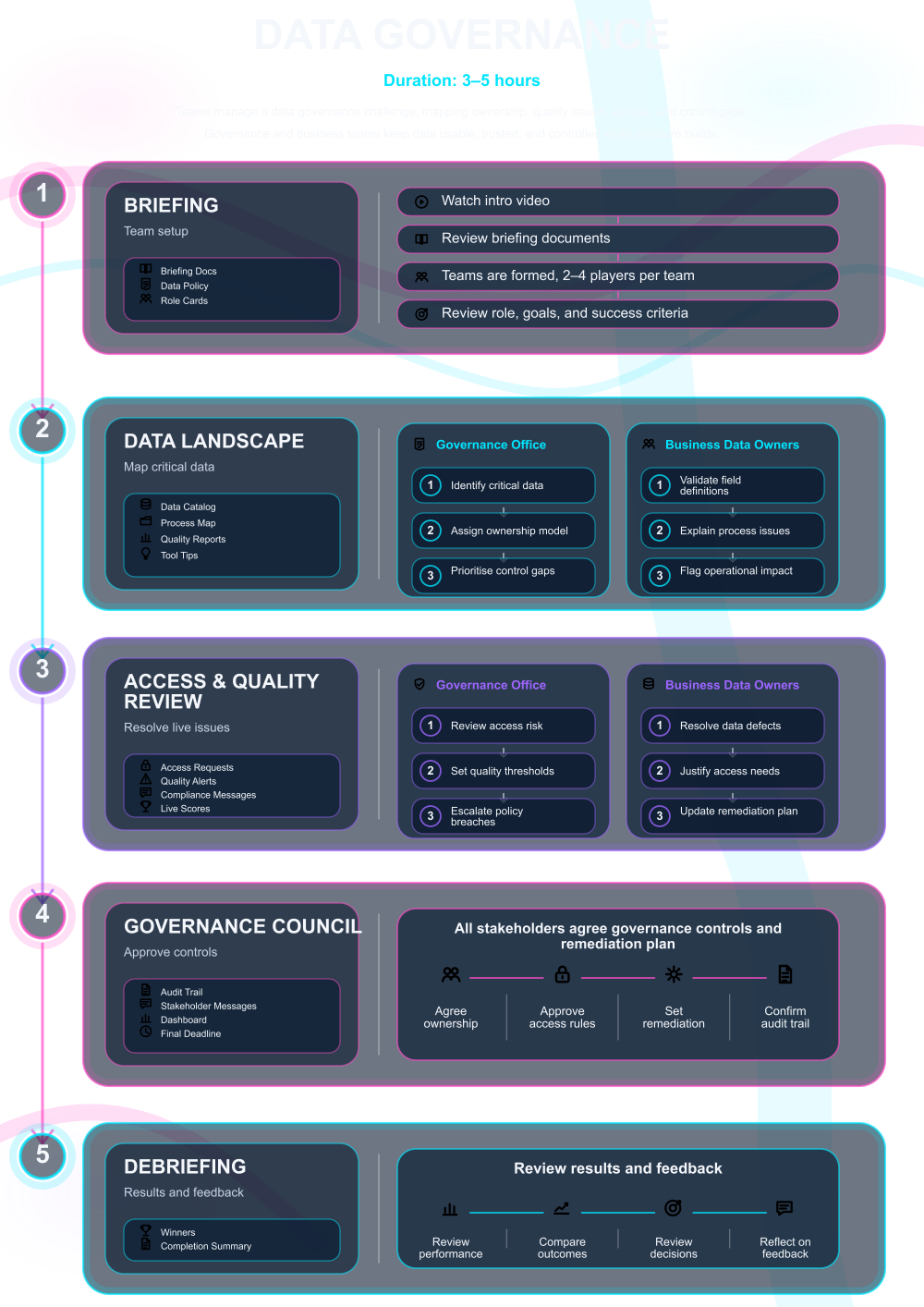

What Participants Do
In the simulation, participants will:
- Assess the current state of the organization's data landscape and maturity.
- Define a target operating model and secure executive sponsorship for the governance program.
- Prioritize and launch data governance initiatives based on business value and risk.
- Develop and approve key policies for data quality, security, and privacy.
- Respond to critical incidents such as data quality failures, audit findings, or data breach notifications.
- Allocate limited resources (budget, personnel) across competing projects and demands.
- Communicate progress and value to the executive steering committee and business stakeholders.
- Reflect on program effectiveness and adapt the strategy for the next phases

Learning Objectives
By the end of the simulation, participants will be able to:
- Understand the core components and value proposition of a formal data governance program.
- Design a suitable data governance operating model and framework for a given organizational context.
- Develop core data governance artifacts, including policies, standards, and role definitions.
- Apply data quality dimensions and methodologies to diagnose and solve business problems.
- Navigate key data privacy and security regulations and their implications for governance.
- Build a compelling business case and communication plan to drive organizational adoption.
- Make strategic trade-offs between data accessibility, control, quality, and cost.
- Develop confidence in leading data governance initiatives and advising business stakeholders.
How the Data Governance Simulation Works
This simulation can be run individually or in teams in academic or corporate contexts. Each cycle represents a stage of getting through a pressing financial situation.
1. Receive a Scenario or Brief Participants are introduced to a company facing specific data-related challenges and opportunities.
2. Analyze the Situation They review organizational charts, stakeholder interviews, current-state assessments, and business priorities.
3. Make Strategic Decisions Participants design their governance model, prioritize foundational projects, allocate resources, and draft key policies.
4. Collaborate and Negotiate Teams may role-play as the Data Governance Office, business data owners, IT, and Legal/Compliance to negotiate priorities and requirements.
5. Communicate Outcomes Participants present their roadmap, policies, or incident response plans to an executive steering committee (instructors or peers).
6. Review and Reflect Feedback highlights program maturity progress, stakeholder satisfaction, risk mitigation, and value creation. Strategies evolve across multiple business quarters or years simulated.
Frequently Asked Questions
Assessment
Assessment of participant performance can be tailored according to the host institution’s objectives (business school, corporate training, assessment centre). Typical assessment criteria include:
- The comprehensiveness and practicality of their data governance framework and roadmap.
- The quality and clarity of their key data policy and standard deliverables.
- Effectiveness in responding to incidents and balancing competing priorities.
- Persuasion and clarity in executive steering committee communications.
- Collaboration and consensus-building in cross-functional negotiations.