A Customer Service Simulation is an interactive learning tool that replicates the challenges of running a service department, allowing participants to make real-time decisions and see their impact on customer metrics and business costs.

Customer Service Simulation
This immersive simulation places participants directly in the control room of a dynamic Customer Service Department, where every decision impacts client satisfaction, operational efficiency, and the company's bottom line.

Customer Service Simulation Overview
In today's competitive landscape, exceptional customer service is the ultimate differentiator. This hands-on simulation challenges participants to manage a full-cycle customer service operation for a growing company.
Navigate real-time incoming requests across multiple channels: phone, email, live chat, and social media. All while allocating finite team resources, managing service level agreements, prioritizing issues, and implementing process improvements.Participants will experience the direct consequences of their staffing, training, and triage decisions on key metrics such as Customer Satisfaction, Net Promoter Score, First Contact Resolution, and operational costs.
The simulation compresses quarterly business cycles into engaging rounds, providing a risk-free environment to master the balance between stellar service and sustainable operations.

Customer Service Simulation Concepts
Participants work through realistic scenarios, which can be customized to emphasize or exclude specific topics depending on the learning goals. This modular structure allows the simulation to be tailored to any type of session. Key concepts include:
- Multi-Channel Customer Service Management
- Resource Allocation and Workforce Planning
- Service Level Agreements and Key Performance Indicators
- Customer Satisfaction and Net Promoter Score
- First Contact Resolution and Average Handling Time
- Root Cause Analysis and Process Improvement
- Cost-to-Serve and ROI of Service Quality
- Escalation Management and Crisis Communication

Gameflow
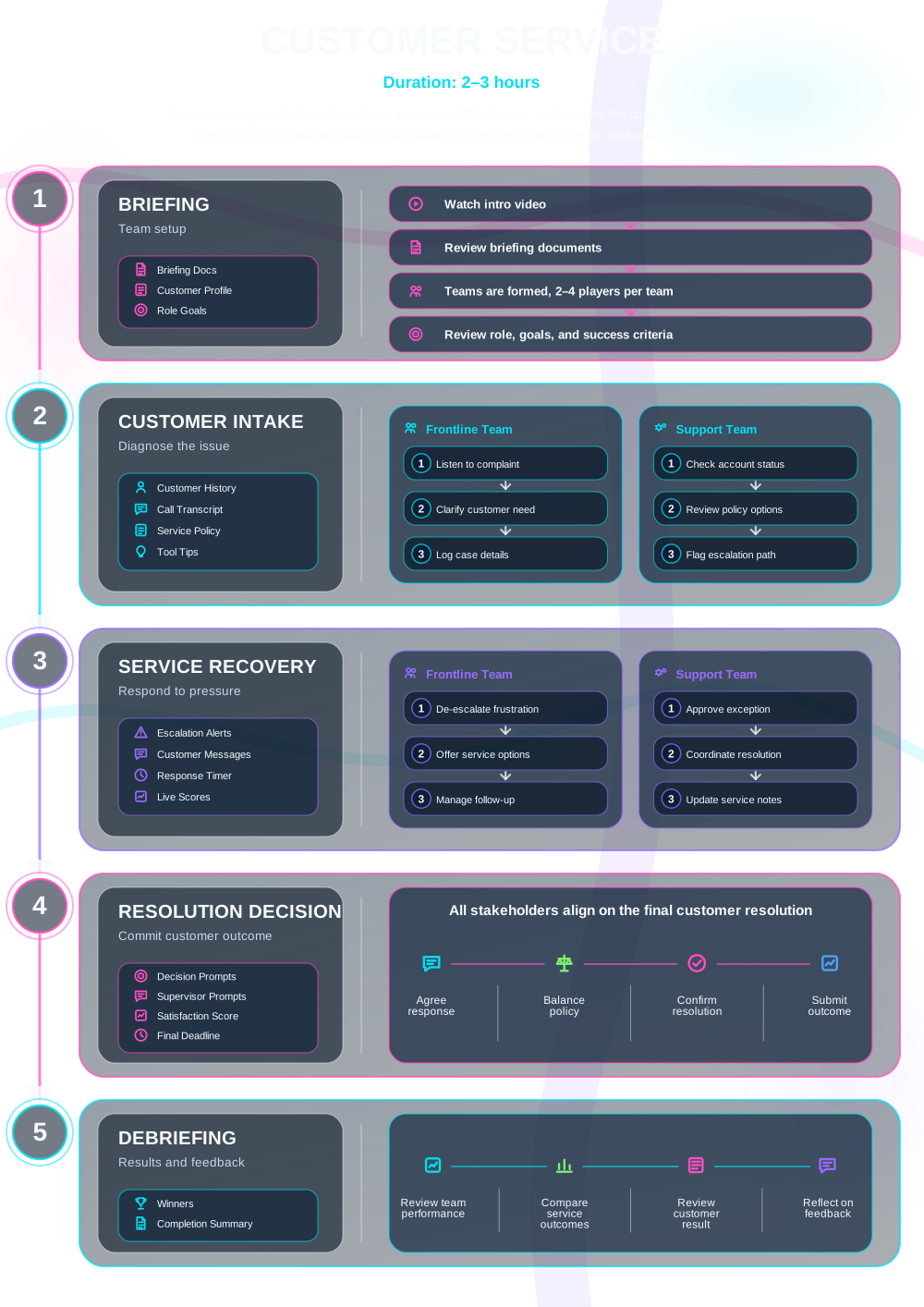

What Participants Do
In the simulation, participants will:
- Allocate customer service agents with different skill levels across communication channels.
- Triage and prioritize incoming customer inquiries in real-time.
- Invest in agent training programs and knowledge base development.
- Analyze performance dashboards to identify bottlenecks and root causes of issues.
- Make strategic decisions on technology adoption.
- Manage a budgetary constraint while trying to improve service metrics.
- Respond to a simulated service crisis or product recall scenario.
- Present a strategic plan for the customer service department to "the board."

Learning Objectives
By the end of the simulation, participants will be able to:
- Interpret and connect key customer service metrics to overall business health.
- Optimize resource allocation to improve efficiency and service quality.
- Develop strategies to improve critical KPIs like CSAT, NPS, and FCR.
- Evaluate the financial impact and ROI of customer service investments.
- Design a proactive process improvement cycle to reduce recurring issues.
- Formulate a crisis communication plan for service failures.
How the Customer Service Simulation Works
This simulation can be run individually or in teams in academic or corporate contexts. Each cycle represents a stage of getting through a pressing financial situation.
1. Receive New Challenges Each quarter introduces new dynamic events, such as a seasonal spike in contact volume, a new product launch causing confusion, or a social media complaint going viral.
** 2. Staffing and Scheduling** Hiring agents, allocating them to channels (phone, email, chat), and managing overtime.
3. Training and Development Investing in skills training, knowledge base software, or cross-training programs.
4. Technology and Process Implementing solutions like chatbot pilots, ticket deflection systems, or process automation.
5. Priority Setting Deciding how to handle the incoming issue queue and where to focus improvement efforts.
6. Submit and Process Teams submit their decisions for the quarter. The sophisticated simulation engine calculates the outcomes based on their choices, competitor actions (if in a multi-team market), and random market events.
Frequently Asked Questions
Assessment
Assessment of participant performance can be tailored according to the host institution’s objectives (business school, corporate training, assessment centre). Typical assessment criteria include:
- Depth and logic of scenario analysis
- Clarity, coherence, and persuasiveness of the presentation
- Ability to adapt in light of news shocks or changes
- Collaboration, division of work, integration of roles, and final coherence
- Rating by peers and self-reflection on approach and decisions