In a P2P lending simulation, students act as lenders on a simulated online marketplace. They analyze borrower profiles, assess credit risk, set interest rates, and allocate funds to build a loan portfolio. This hands-on P2P lending training teaches credit analysis, portfolio diversification, and the impact of default rates on returns.

Crowdfunding and Peer-to-Peer Lending Simulation
The Crowdfunding and Peer-to-Peer Lending Simulation immerses participants in the roles of both fundraisers and investors, challenging them to master the platforms and strategies that are shaping how ventures are funded and how capital is deployed.

Crowdfunding and Peer-to-Peer Lending Simulation Overview
This hands-on simulation replicates the complete lifecycle of modern alternative finance platforms. Participants will not only launch and manage fundraising campaigns for various ventures but will also act as individual and institutional investors on a P2P lending marketplace.
They must analyze risk, set terms, build credibility, and respond to market dynamics to succeed. The simulation captures the critical tension between entrepreneurial storytelling, due diligence, risk pricing, and platform economics, providing a 360-degree view of this fast-growing sector. Teams compete to build the most successful venture portfolio and achieve the highest risk-adjusted returns.
Although ideal for undergraduate and graduate finance courses, executive training, and corporate finance skill workshops, the simulation is modular and scalable, allowing instructors to vary complexity.

Crowdfunding and Peer-to-Peer Lending Simulation Concepts
Participants work through realistic scenarios, which can be customized to emphasize or exclude specific topics depending on the learning goals. This modular structure allows the simulation to be tailored to any type of session. Key concepts include:
- Alternative Finance Ecosystem
- Equity, Rewards, and Debt-Based Crowdfunding
- Credit Risk Assessment and Borrower Scoring
- Interest Rate Setting and Yield Targeting
- Campaign Storytelling and Marketing Momentum
- Platform Fees and Revenue Models
- Diversification and Portfolio Management in P2P Loans
- Due Diligence and Trust Signals
- Secondary Market Dynamics
- Regulatory Considerations for Crowdfunding

Gameflow

What Participants Do
In the simulation, participants will:
- Develop compelling campaign pages, set funding targets and rewards/equity terms, allocate a marketing budget to drive momentum, and interact with potential backers.
- Browse live campaigns and borrower listings, conduct financial and narrative due diligence, bid on loan portions or invest in equity rounds, and build a diversified portfolio across risk bands.
- Actively monitor performance, reinvest capital from repayments, and potentially sell loans on a simulated secondary market.
- Use simulated platform dashboards showing success rates, default trends, and market demand to inform strategy.
- Aim for the highest combined score based on fundraising success, portfolio return, and risk management.

Learning Objectives
By the end of the simulation, participants will be able to:
- Differentiate between the major models of crowdfunding and P2P lending and their appropriate use cases.
- Design and evaluate the key components of a successful fundraising campaign.
- Apply a structured framework for assessing borrower credit risk and pricing loans accordingly.
- Construct and manage a diversified P2P lending or crowdfunding investment portfolio.
- Calculate and interpret key metrics like expected return, default rate, and platform impact on net yield.
- Explain the business model and critical success factors for the platforms themselves.
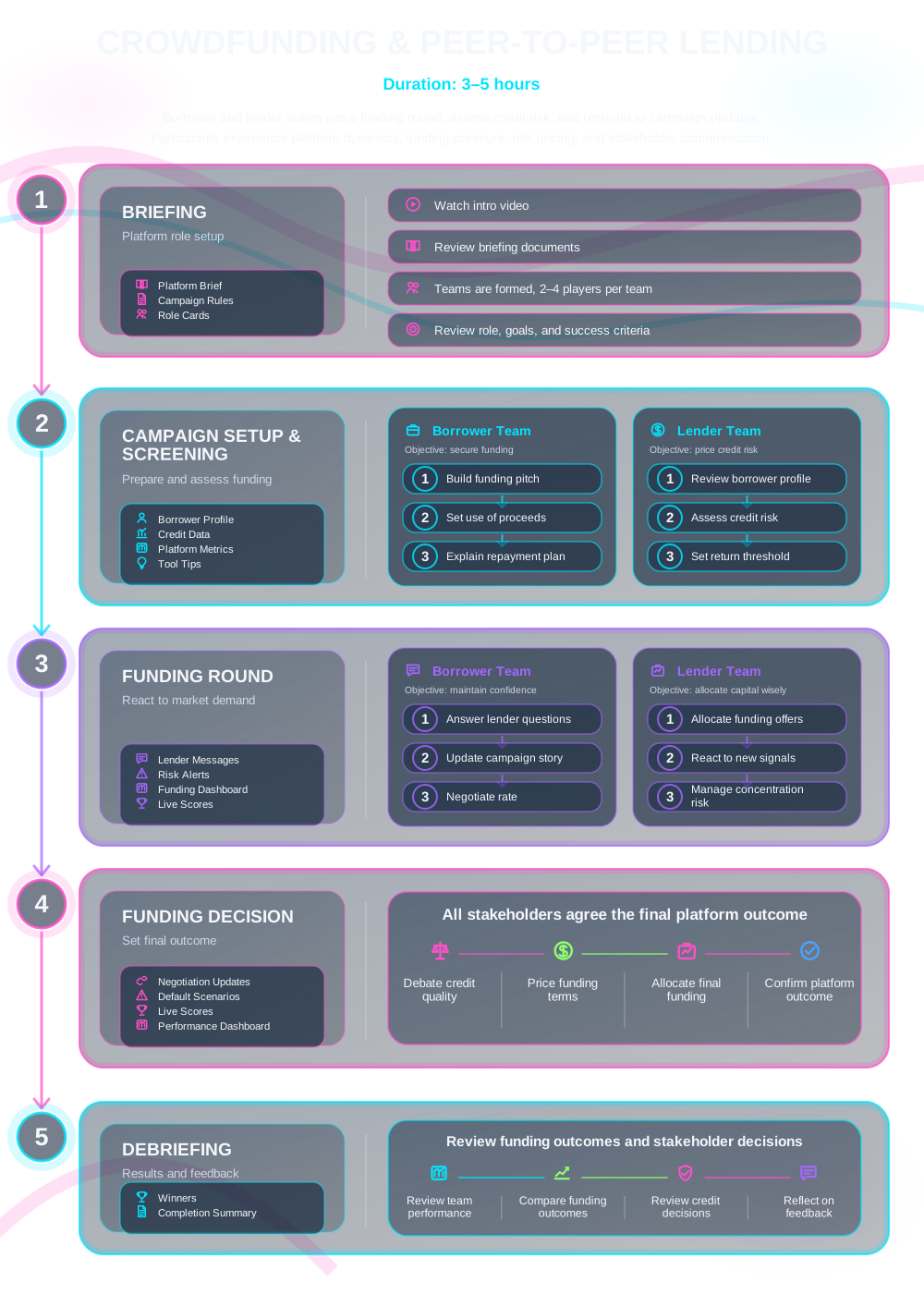
How the Crowdfunding and Peer-to-Peer Lending Simulation Works
This simulation can be run individually or in teams in academic or corporate contexts. Each cycle represents a stage of getting through a pressing financial situation.
1. Setup Teams receive initial capital and draft business ideas for crowdfunding.
** 2. Campaign Phase** They launch and market their campaigns, while simultaneously reviewing other teams' campaigns and borrower profiles on the P2P platform.
3. Investment and Funding Phase Capital is allocated as investments in other projects/loans. Campaigns either succeed (meet funding goal) or fail.
4. Results and Management Performance updates are generated. Returns flow in, some loans may default, and teams must manage their cash flow and reinvest.
** 5. Final Assessment** The simulation concludes with a comprehensive review of portfolio performance, fundraising success, and a ranking of teams.
Frequently Asked Questions
Assessment
Assessment of participant performance can be tailored according to the host institution’s objectives (business school, corporate training, assessment centre). Typical assessment criteria include:
- Based on percentage of funding goal achieved, campaign "trust" metrics, and cost-effectiveness of marketing spend.
- Calculated on the risk-adjusted return of the P2P/crowdfunding investment portfolio, factoring in net yield, diversification, and capital recovery rates.
- Assessed through brief mandatory submissions where teams justify their key campaign choices and investment thesis for major allocations, demonstrating their understanding of the core concepts.