It is ideal for students and professionals interested in commercial banking, corporate lending, credit analysis, risk management, and private debt.

Credit Risk Mitigation Simulation
In the Credit Risk Mitigation Simulation, analyze borrower profiles and build strategies to protect a lending portfolio from potential defaults. The simulation challenges to balance the profit pursuits with the imperative of risk management.

Credit Risk Mitigation Simulation Overview
Participants navigate the complex responsibilities of a credit department within a bank or financial institution. Each round presents evolving market conditions, new client loan applications, and unforeseen economic events that threaten portfolio stability.
They must conduct thorough risk analysis, decide on credit approvals, set appropriate terms and covenants, and actively manage the existing portfolio to mitigate losses. The simulation emphasizes real-time decision-making, requiring a blend of quantitative financial analysis, qualitative judgment, and strategic foresight. Participants will experience firsthand how credit decisions directly impact the financial institution's profitability and resilience.
This simulation is designed for university finance programs, risk management courses, executive training in banking, and corporate workshops. It transforms abstract credit principles into tangible skills, demonstrating the critical interplay between risk, return, and capital preservation.

Credit Risk Mitigation Simulation Concepts
Participants work through realistic scenarios, which can be customized to emphasize or exclude specific topics depending on the learning goals. This modular structure allows the simulation to be tailored to any type of session. Key concepts include:
- Credit Analysis and Due Diligence
- Probability of Default and Loss Given Default
- Loan Structuring and Covenants
- Collateral Valuation and Management
- Portfolio Risk Management
- Credit Risk Mitigation Techniques
- Regulatory Capital Requirements
- Early Warning Systems and Problem Loan Management
- Economic Cycle Impact
- Risk-Adjusted Return on Capital

Gameflow
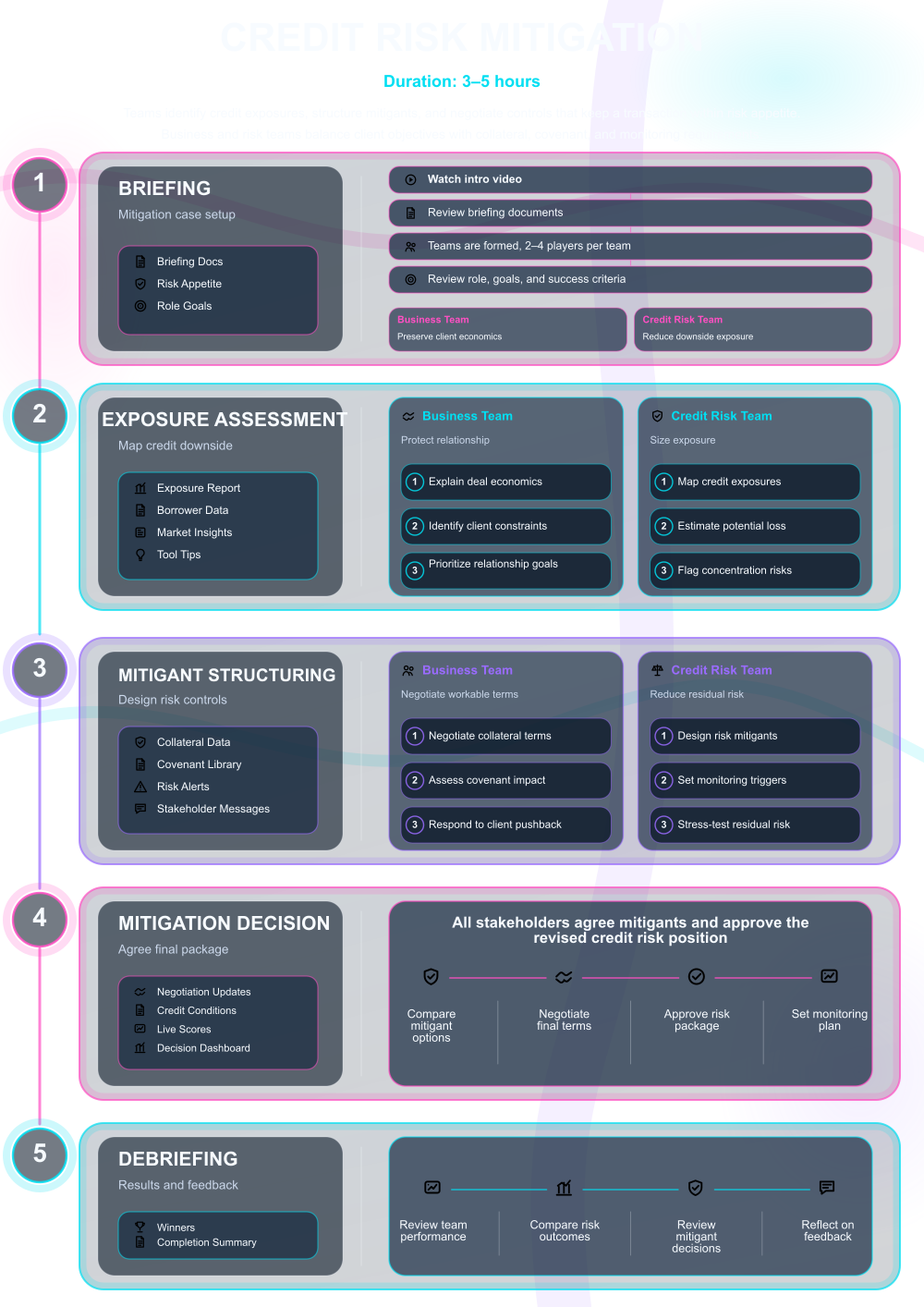

What Participants Do
In the simulation, participants will:
- Analyze detailed credit applications and financial dossiers.
- Assign internal credit ratings and calculate risk-adjusted pricing.
- Structure loan facilities, defining amounts, tenors, interest rates, and covenants.
- Decide to approve, decline, or renegotiate credit proposals.
- Monitor an existing loan book, reacting to early warning signals and client requests for amendments.
- Proactively use risk mitigation tools to hedge exposure in a deteriorating portfolio.
- Present credit recommendations and portfolio reviews to a simulated credit committee.
- Reflect on the outcomes of their decisions and adapt strategies for subsequent rounds.

Learning Objectives
By the end of the simulation, participants will be able to:
- Understand the end-to-end credit risk management process within a financial institution.
- Apply fundamental credit analysis techniques to assess borrower risk.
- Structure loan agreements that appropriately mitigate identified risks.
- Explain key regulatory concepts like capital requirements and their business implications.
- Make informed trade-offs between risk acceptance, pricing, and portfolio growth targets.
- Implement proactive portfolio monitoring and problem loan management strategies.
- Communicate credit decisions and risk rationale clearly and persuasively to stakeholders.
- Develop confident judgment under conditions of uncertainty and information asymmetry.
How the Credit Risk Mitigation Simulation Works
This simulation can be run individually or in teams in academic or corporate contexts. Each cycle represents a stage of getting through a pressing financial situation.
1. Receive the Brief Participants are introduced to their institution's risk appetite, portfolio status, and new credit proposals.
** 2. Conduct Analysis** They review borrower data, financial models, industry reports, and market conditions.
3. Make Risk Decisions Participants decide on each proposal, set terms, and choose whether to employ risk mitigation instruments.
4. Collaborate and Negotiate In team settings, members debate analysis and recommendations. Participants may also negotiate terms with simulated client teams.
5. Present to Committee Teams or individuals justify their decisions in a structured credit memo or committee presentation.
6. Review Outcomes and Adapt The simulation engine provides feedback on portfolio performance, defaults, and profitability. Participants use these insights to refine their approach in the next round.
Frequently Asked Questions
Assessment
Assessment of participant performance can be tailored according to the host institution’s objectives (business school, corporate training, assessment centre). Typical assessment criteria include:
- Net credit losses, non-performing loan ratio, and risk-adjusted return.
- Quality of financial analysis, appropriateness of loan structuring, and use of covenants.
- Effective and judicious use of guarantees, insurance, or other hedging tools.
- Clarity, structure, and persuasiveness of credit recommendations and portfolio reviews.
- Ability to learn from feedback and adjust the credit policy in response to changing economic conditions.