This simulation is ideal for MBA students, executive education programs, corporate training for senior managers and board members, and professionals in compliance, legal, and finance roles.

Corporate Governance and Financial Ethics Simulation
In today's complex regulatory environment and heightened public scrutiny, a strong foundation in corporate governance and financial ethics is not just a compliance issue, but a critical competitive advantage.

Corporate Governance and Financial Ethics Simulation Overview
This immersive simulation places participants in the high-stakes roles of board members, C-suite executives, and compliance officers of a publicly-traded company.
Participants will face a series of realistic, challenging scenarios that test their understanding of fiduciary duty, risk management, and ethical decision-making. They must balance shareholder interests with the needs of other stakeholders, navigate conflicts of interest, manage internal and external crises, and make decisions that will impact the company's valuation, reputation, and long-term sustainability.The simulation provides a safe, dynamic environment to experience the real-world consequences of governance and ethical choices.
Although ideal for undergraduate and graduate finance courses, executive training, and corporate finance skill workshops, the simulation is modular and scalable, allowing instructors to vary complexity.

Corporate Governance and Financial Ethics Simulation Concepts
Participants work through realistic scenarios, which can be customized to emphasize or exclude specific topics depending on the learning goals. This modular structure allows the simulation to be tailored to any type of session. Key concepts include:
- Fiduciary Duties
- Board Structure and Committees
- Stakeholder vs. Shareholder Theory
- Ethical Decision-Making Frameworks
- Conflict of Interest Identification and Management
- Executive Compensation and Say-on-Pay
- Whistleblower Policies and Protections
- Financial Reporting Integrity and Fraud Prevention
- ESG Integration
- Crisis Management Reputational Risk
- Regulatory Compliance
- Insider Trading and Confidentiality

Gameflow
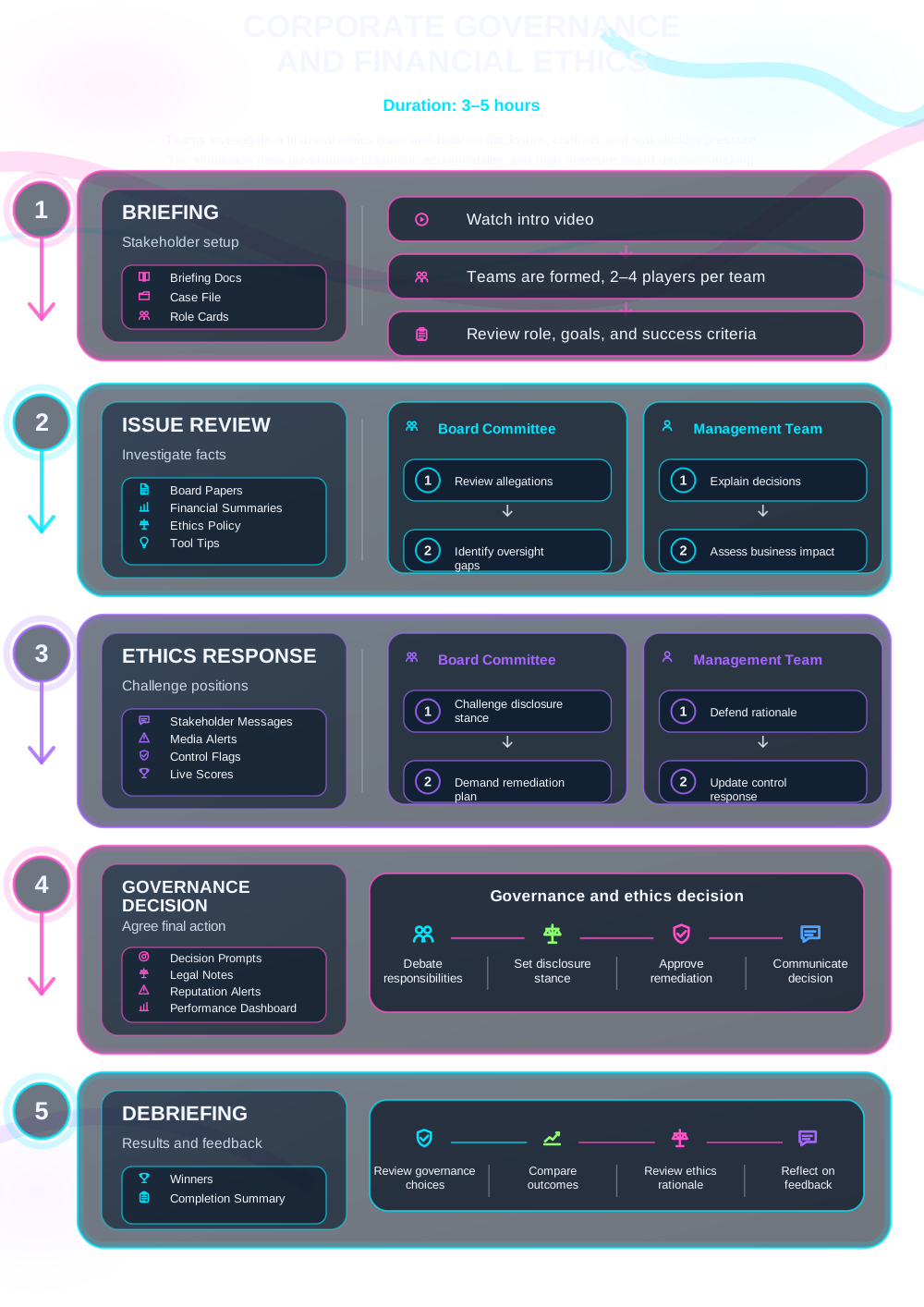

What Participants Do
In the simulation, participants will:
- Assume specific roles on the Board of Directors or executive team.
- Review detailed dossiers on issues like questionable accounting practices, executive misconduct, hostile takeover bids, and ESG concerns.
- Engage in structured boardroom debates to build consensus.
- Make critical decisions on corporate policy, executive hires, and crisis response.
- Respond to unfolding events like whistleblower allegations or negative media reports.
- See the direct impact of their decisions on the company's stock price, credit rating, public reputation, and employee morale.

Learning Objectives
By the end of the simulation, participants will be able to:
- Identify and analyze potential conflicts of interest and ethical dilemmas in a corporate setting.
- Apply ethical frameworks to guide complex business decisions.
- Evaluate the effectiveness of different corporate governance structures.
- Understand the legal and regulatory responsibilities of directors and officers.
- Articulate the business case for strong corporate governance and ethical culture.
- Develop strategies for implementing and monitoring compliance and ethics programs.
- Respond effectively to a corporate crisis from a governance perspective.
How the Corporate Governance and Financial Ethics Simulation Works
This simulation can be run individually or in teams in academic or corporate contexts. Each cycle represents a stage of getting through a pressing financial situation.
1. Setup and Role Assignment Participants are divided into teams, each representing the board of a different company. Roles are assigned.
2. Scenario Release A new governance or ethical challenge is released each round.
3. Team Deliberation Teams review confidential information, debate the issues, and must reach a collective decision or formulate a response plan.
4. Decision Input Teams submit their official decisions, policy changes, or public statements through the simulation platform.
5. Real-Time Feedback and Consequences The simulation engine processes the decisions, generating immediate consequences on a dynamic "Company Dashboard" showing stock price, reputation score, regulatory scrutiny level, and analyst opinions.
6. Instructor-Led Debrief A facilitated debrief session analyzes the teams' choices, explores alternative approaches, and reinforces key learning points, connecting the simulation experience to theoretical concepts.
Frequently Asked Questions
Assessment
Assessment of participant performance can be tailored according to the host institution’s objectives (business school, corporate training, assessment centre). Typical assessment criteria include:
- Accuracy of data analysis, calculations, and the financial justification for the decisions.
- Quality and relevancy of the change propositions.
- Professionalism, structure, persuasiveness, and effective use of visual aids during the presentation.
- Ability to think on foot, handle objections, and defend strategic choices under pressure from the "client".