It is ideal for MBA students, finance executives in development programs, and professionals in corporate development, treasury, or strategic planning roles seeking a holistic view of corporate finance.

Corporate Financial Strategy Simulation
The Corporate Financial Strategy Simulation is a dynamic, hands-on learning platform that thrusts participants into the high-stakes role of a corporate finance team.

Corporate Financial Strategy Simulation Overview
Welcome to the ultimate proving ground for aspiring CFOs, corporate financiers, and strategic leaders. You will navigate the complex, interconnected decisions of capital structure, investment, dividends, and mergers & acquisitions (M&A) in a competitive and evolving market.
This is not a passive exercise; it’s an immersive experience where every financial decision ripples through your company's valuation, credit rating, and shareholder returns. Learn to optimize your firm's financial engine under pressure, balancing short-term liquidity with long-term strategic goals.
Although ideal for undergraduate and graduate finance courses, executive training, and corporate finance skill workshops, the simulation is modular and scalable, allowing instructors to vary complexity.

Corporate Financial Strategy Simulation Concepts
Participants work through realistic scenarios, which can be customized to emphasize or exclude specific topics depending on the learning goals. This modular structure allows the simulation to be tailored to any type of session. Key concepts include:
- Capital Structure Optimization
- Corporate Valuation
- Mergers and Acquisitions
- Dividend Policy and Share Buybacks
- Credit Markets and Debt Issuance
- Financial Forecasting and Modeling
- Risk Management
- Market Signaling

Gameflow
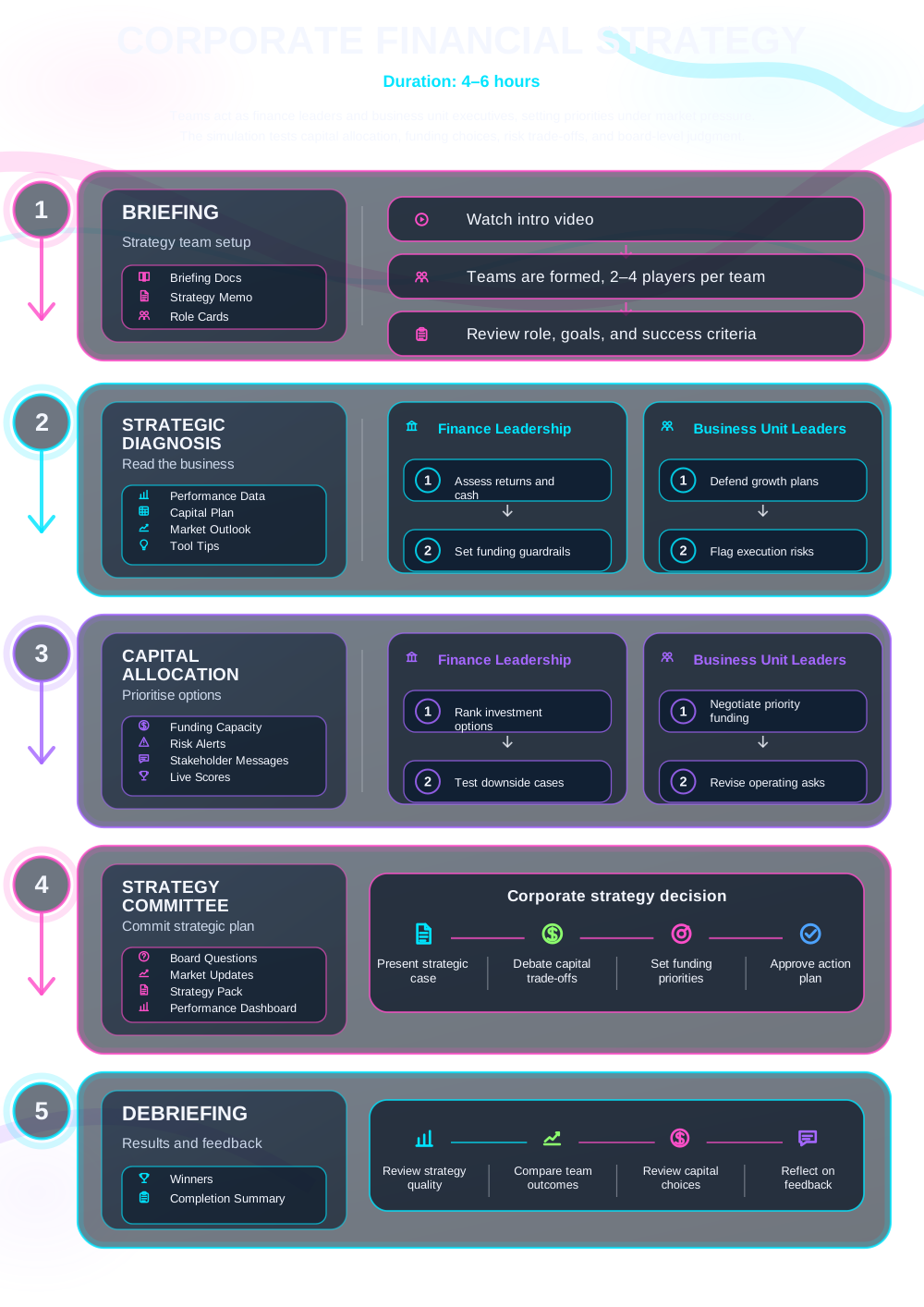

What Participants Do
In the simulation, participants will:
- Take the helm of a publicly-traded firm over multiple simulated fiscal years.
- Raise capital in dynamic debt and equity markets, managing maturity profiles and costs.
- Identify, value, and negotiate the acquisition of target companies to drive growth.
- Decide on dividend levels and share repurchase programs.
- Benchmark your financial strategy against rival teams in the simulation.
- Respond to market events, analyst questions, and rating agency reviews.
- Make integrated decisions to maximize your firm's share price and economic value added.

Learning Objectives
By the end of the simulation, participants will be able to:
- Evaluate the impact of capital structure decisions on firm value, risk, and cost of capital.
- Conduct valuations for organic projects and potential M&A targets using standard methodologies.
- Construct a coherent corporate financial strategy that aligns investment, financing, and dividend policies.
- Analyze the trade-offs between leveraging for growth and maintaining financial flexibility.
- Interpret market signals and manage stakeholder expectations in a competitive environment.
- Synthesize complex financial data into a strategic action plan under time constraints.
How the Corporate Financial Strategy Simulation Works
This simulation can be run individually or in teams in academic or corporate contexts. Each cycle represents a stage of getting through a pressing financial situation.
1. Initial Analysis Teams receive detailed company financials, industry data, and market conditions.
2. Decision Rounds Each round represents a fiscal quarter or year. Teams submit a comprehensive set of financial strategy decisions.
3. Market Simulation The platform's algorithm processes all team decisions, simulating competitive interactions, economic shifts, and market reactions.
4. Results and Analysis Teams receive detailed financial reports, updated stock prices, credit ratings, and analyst commentary.
5. Debrief and Strategy Refinement Instructors lead discussions on outcomes, and teams adjust their strategy for the next round, incorporating lessons learned.
6. Final Assessment Performance is evaluated based on a balanced scorecard of metrics, including shareholder return, credit strength, and strategic execution.
Frequently Asked Questions
Assessment
Assessment of participant performance can be tailored according to the host institution’s objectives (business school, corporate training, assessment centre). Typical assessment criteria include:
- Total Shareholder Return, Credit Rating, Market Share Gain, and EBITDA Growth.
- Evaluation of the team's final strategic plan and boardroom presentation, defending their financial choices.
- Collaboration, division of work, integration of roles, and final coherence
- Rating by peers and self-reflection on approach and decisions