Finance students, investment professionals, portfolio managers, and corporate trainers aiming to deepen understanding of convertible bonds.

Convertible Bonds Simulation
The Convertible Bonds Simulation immerses participants in the dynamic financial world of convertible bond investing, offering a hands-on experience to understand their unique hybrid nature combining debt and equity instruments.

Convertible Bonds Simulation Overview
This comprehensive simulation guides participants through the lifecycle of convertible bonds, focusing on pricing, portfolio construction, hedge strategies, and risk management.
Participants navigate market volatility while balancing the bond's fixed-income characteristics with embedded equity options. The simulation incorporates realistic scenarios like market shocks, conversion opportunities, and issuer call/put provisions, emphasizing decision-making under uncertainty.
Tailored for finance students, professionals, or corporate training, the simulation blends technical finance concepts with practical application and strategic thinking.

Convertible Bonds Simulation Concepts
Participants work through realistic scenarios, which can be customized to emphasize or exclude specific topics depending on the learning goals. This modular structure allows the simulation to be tailored to any type of session. Key concepts include:
- Convertible bond structure and features
- Debt-equity hybrid instrument characteristics
- Pricing models
- Conversion options and timing
- Call and put provisions
- Convertible arbitrage strategies
- Interest rate and credit risk management
- Impact of underlying stock price movements
- Portfolio construction and rebalancing
- Risk-adjusted return measurement
- Regulatory and compliance considerations
- Market shocks and scenario analysis

Gameflow
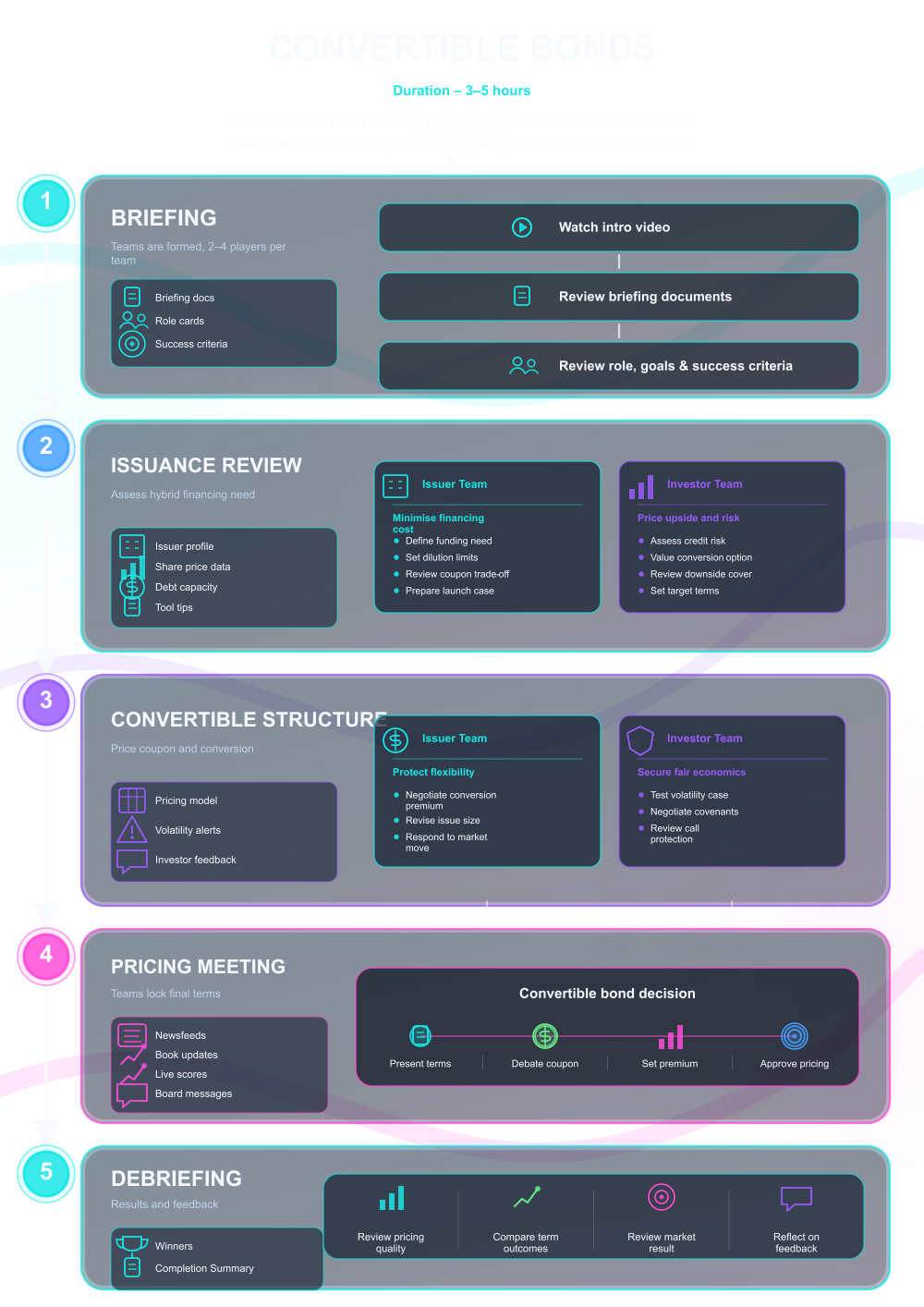

What Participants Do
In the simulation, participants will:
- Analyze market scenarios and convertible bond terms
- Model bond pricing using simulation techniques
- Decide optimal conversion timing and strategy
- Construct portfolios balancing income and equity exposure
- Employ hedge strategies to mitigate risks
- Manage liquidity and leverage within the portfolio
- Respond to market shocks and issuer actions
- Communicate strategy rationale to stakeholders
- Adjust portfolios based on evolving market data

Learning Objectives
By the end of the simulation, participants will be able to:
- Understand convertible bond mechanics and valuation
- Apply pricing models and simulation for decision-making
- Develop skills in convertible arbitrage and hedging
- Balance fixed income and equity risk in portfolio management
- Navigate regulatory and issuer-specific constraints
- Analyze market conditions affecting convertible bonds
- Enhance judgment under volatility and uncertainty
- Communicate effectively with investors and team members
How the Convertible Bonds Simulation Works
This simulation can be run individually or in teams in academic or corporate contexts. Each cycle represents a stage of getting through a pressing financial situation.
1. Receive Market Brief Participants begin with a detailed scenario outlining market conditions, bond issues, and investor mandates.
2. Analyze Data Using provided market data and convertible bond specifics, participants model prices and risks.
3. Strategic Decisions Participants choose when to convert, hedge, or hold, adjusting portfolios dynamically.
4. Collaborative Roles Teams may adopt roles such as portfolio managers, analysts, or investor relations.
5. Execution and Feedback Participants implement strategies, monitor outcomes, and receive feedback on performance.
6. Reflection and Adaptation Insights from outcomes guide further rounds, enhancing strategy sophistication and risk management skills.
Frequently Asked Questions
Assessment
Assessment of participant performance can be tailored according to the host institution’s objectives (business school, corporate training, assessment centre). Typical assessment criteria include:
- Choosing the timing, method (open market, tender offer, etc.), and scale of the share repurchase within regulatory and market constraints
- Assessing effects on earnings per share (EPS), return on equity (ROE), free cash flow, and other relevant financial metrics.
- Understanding and anticipating stock price movements and investor sentiment before and after repurchase announcements.
- Balancing cash reserves, debt capacity, and opportunity cost in deploying capital for share buybacks.
- Navigating legal restrictions, disclosure requirements, and tax implications associated with repurchases.
- Evaluating risks of overpaying shares, leverage increases, or adverse market conditions.
- Crafting clear, persuasive updates or presentations explaining repurchase strategy and expected benefits.
- Coordinating roles that may include finance, legal, investor relations, and treasury teams to execute repurchases effectively.
- Responding to changes in market volatility, company performance, or macroeconomic factors impacting repurchase plans.
- Using metrics such as stock price reaction, impact on shareholder value, and alignment with company financial strategy.
- Working through different economic or corporate scenarios that affect repurchase rationale and execution.
- Considering the impact of repurchases on broader stakeholder interests and corporate responsibility