It's ideal for students and professionals in real estate finance, construction management, project management, commercial banking, and development.

Construction Finance Simulation
In this Construction Finance Simulation, participants are securing funding, managing cash flow, and navigating financial risks while balancing lender requirements, contractor payments, and project milestones in a highly dynamic environment.

Construction Finance Simulation Overview
Participants step into the role of construction financial managers or development financiers tasked with shepherding a major project from the drawing board to completion. Each simulation round introduces new challenges, shifts in material costs, interest rate volatility, unexpected site conditions, or delays from contractors.
They must structure phased financing, draw down funds against milestones, manage liquidity for upcoming payments, and renegotiate terms under pressure. The simulation emphasizes financial decision-making under real-world uncertainty, blending quantitative analysis with stakeholder negotiation.
This simulation is ideal for university programs in real estate finance, construction management, and executive training for developers and banks. It brings the critical junction of finance and construction to life, showing how funding strategies, risk mitigation, and project oversight interact to determine a project's success or failure.

Construction Finance Simulation Concepts
Participants work through realistic scenarios, which can be customized to emphasize or exclude specific topics depending on the learning goals. This modular structure allows the simulation to be tailored to any type of session. Key concepts include:
- Phased project financing and capital drawdown schedules
- Construction cost estimation and budget management
- Cash flow forecasting and liquidity management for projects
- Risk assessment (completion risk, cost overrun, interest rate risk)
- Lender covenants and reporting requirements
- Working capital management with contractors and suppliers
- Impact of delays and change orders on project finance
- Senior debt, mezzanine financing, and equity structuring
- Financial close processes and documentation
- Exit strategies and refinancing upon project completion

Gameflow
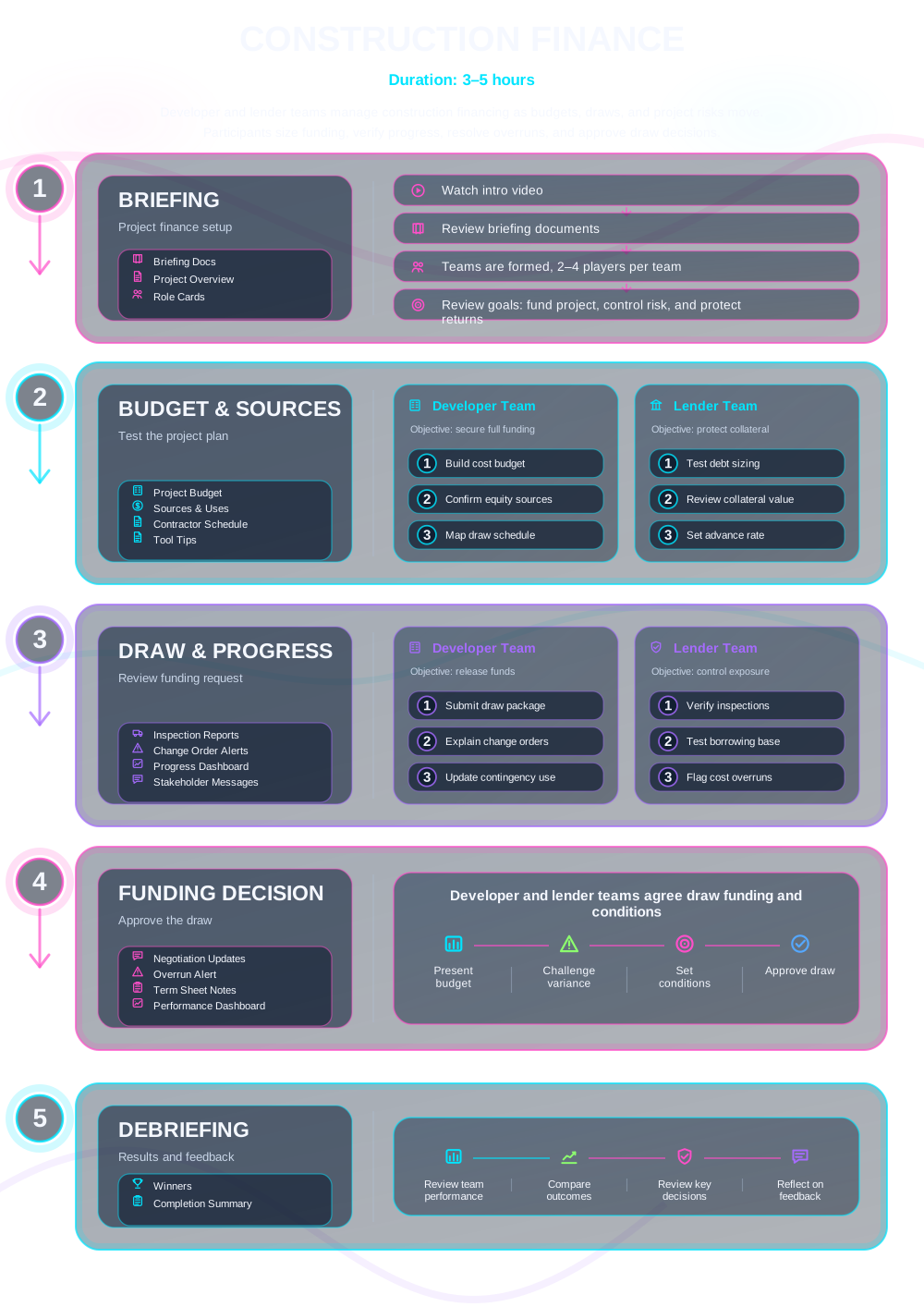

What Participants Do
In the simulation, participants will:
- Structure the financing mix and negotiate term sheets with lenders.
- Create and manage detailed project budgets and phased cash flow forecasts.
- Authorize progress payments to contractors based on milestone verification.
- Manage working capital and reserve accounts to cover unexpected costs.
- Respond to financial shocks like cost inflation or permit delays.
- Present financial health and covenant compliance updates to lenders and investors.
- Reflect on financing strategy effectiveness and make mid-course adjustments.

Learning Objectives
By the end of the simulation, participants will be able to:
- Understand the structure and key players in construction and project finance.
- Develop and manage a project budget with appropriate contingencies.
- Create and analyze a phased construction cash flow forecast.
- Identify, assess, and mitigate key financial risks in construction projects.
- Negotiate and comply with common lender covenants and reporting requirements.
- Make strategic decisions to resolve liquidity crunches or cost overruns.
- Communicate project financial status effectively to lenders and stakeholders.
- Build confidence in managing the financial lifecycle of a capital project.
How the Construction Finance Simulation Works
This simulation can be run individually or in teams in academic or corporate contexts. Each cycle represents a stage of getting through a pressing financial situation.
1. Receive the Project Brief Participants are introduced to the project specs, initial budget, and market conditions.
** 2. Structure the Deal** They analyze financing options, negotiate terms, and secure the initial financial close.
3. Manage Project Execution Each round represents a project phase. Participants review progress, approve drawdowns, manage costs, and update forecasts.
4. Navigate Challenges Unplanned events are introduced. Teams must analyze the financial impact and decide on a course of action.
5. Collaborate and Negotiate Teams may act as the developer, lender, or contractor, negotiating payment terms or covenant waivers.
6. Report and Reflect Participants prepare lender reports and investor updates. Feedback highlights budget adherence, covenant compliance, and overall financial performance.
Frequently Asked Questions
Assessment
Assessment of participant performance can be tailored according to the host institution’s objectives (business school, corporate training, assessment centre). Typical assessment criteria include:
- Accuracy and management of the project budget and cash flow forecast.
- Strategic effectiveness in securing financing and negotiating terms.
- Responsiveness and problem-solving capability when managing project risks and shocks.
- Clarity, accuracy, and persuasiveness in lender reporting and stakeholder communication.
- Collaboration and adaptability in team-based roles.