This simulation is designed for finance professionals at all levels, including investment bankers, private equity and hedge fund analysts, asset managers, corporate financiers, and MBA students aiming to excel in these fields.

Conflict Resolution Simulation
Conflict is not a matter of if, but when. Deals strain under pressure, teams disagree on strategy, and negotiations hit impasses. Transform conflict from a disruptive force into a strategic tool for achieving superior financial and relational outcomes.

Conflict Resolution Simulation Overview
Traditional finance training focuses on numbers, models, and markets, often neglecting the critical human element that can make or break a deal. The Conflict Resolution in Finance Simulation bridges this gap. It is a dynamic, hands-on learning experience that places participants in realistic financial scenarios—such as M&A negotiations, fundraising rounds, or portfolio company interventions—where conflicting interests are inherent.
Participants will not merely learn theory; they will practice diagnosing the root causes of conflict, deploying advanced negotiation tactics, and mediating disputes between parties. They will discover how to preserve value, maintain professional relationships, and steer complex financial interactions toward successful conclusions, even when opinions and incentives sharply diverge.
Although ideal for undergraduate and graduate finance courses, executive training, and corporate finance skill workshops, the simulation is modular and scalable, allowing instructors to vary complexity.

Conflict Resolution Simulation Concepts
Participants work through realistic scenarios, which can be customized to emphasize or exclude specific topics depending on the learning goals. This modular structure allows the simulation to be tailored to any type of session. Key concepts include:
- Sources of Financial Conflict
- Conflict Styles
- Negotiation Dynamics
- Emotional Intelligence
- Value Creation vs. Value Claiming
- Communication and Active Listening
- Mediation and Third-Party Intervention
- Ethical Decision-Making

Gameflow
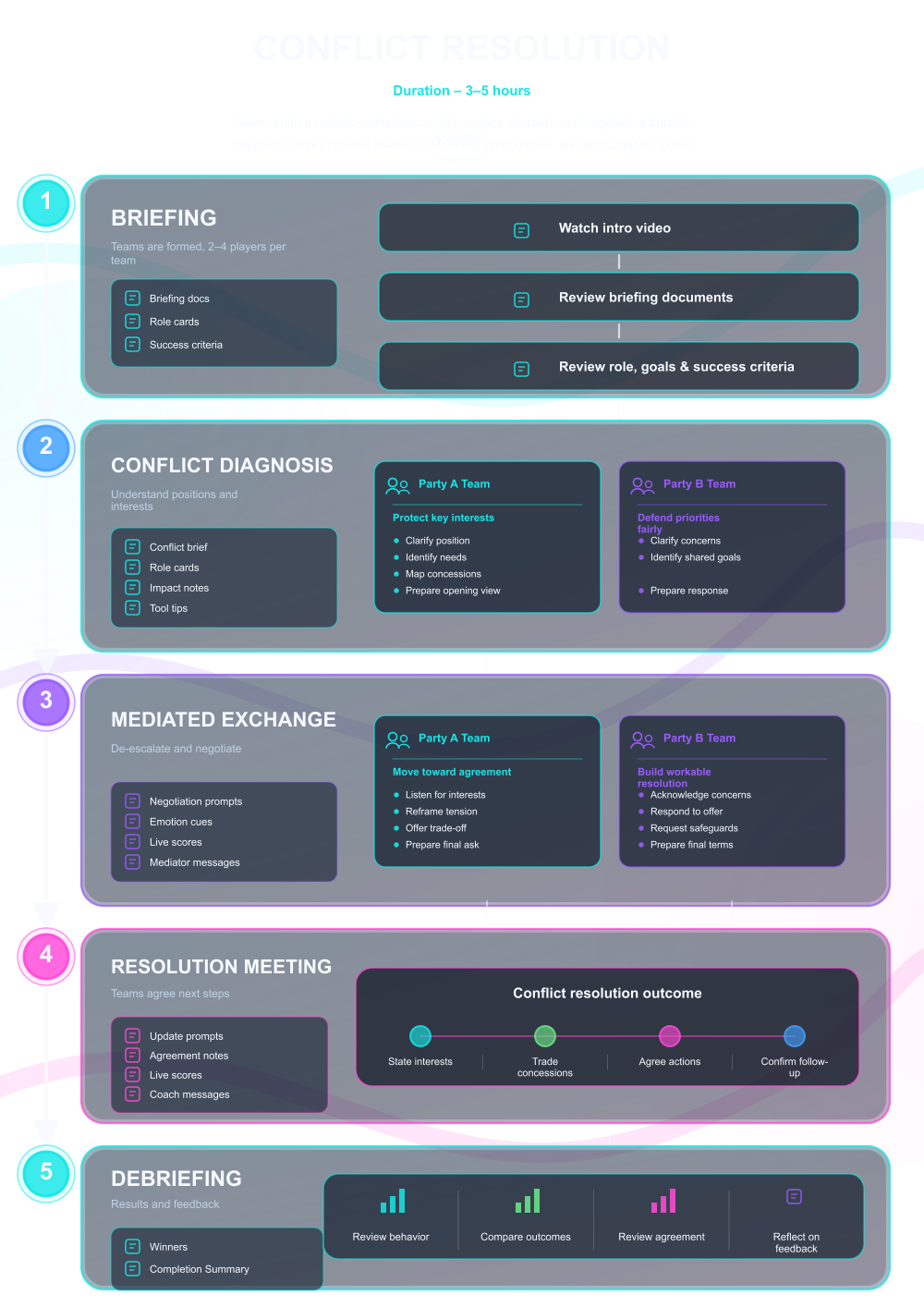

What Participants Do
In the simulation, participants will:
- Assume roles such as Hedge Fund Manager, Investment Banker, Venture Capitalist, or Company CEO.
- Tackle scenarios like a contentious term sheet negotiation, a post-merger integration dispute, or a distressed debt restructuring.
- Formulate a conflict resolution plan before entering each negotiation.
- Engage in difficult dialogues, receive real-time feedback, and adapt their approach.
- Assess the financial, operational, and relational results of their conflict management choices.
- Evaluate and provide constructive feedback on their colleagues' negotiation and mediation techniques.

Learning Objectives
By the end of the simulation, participants will be able to:
- Diagnose the underlying causes and dynamics of conflict in financial settings.
- Apply a structured framework to prepare for and manage difficult financial negotiations.
- Utilize advanced communication and active listening skills to de-escalate tension and build rapport.
- Differentiate between positions and interests to create value in deadlocked situations.
- Develop strategies for mediating conflicts between other parties to protect deal value.
- Enhance their emotional intelligence and ability to perform under stress.
- Articulate the impact of effective conflict resolution on financial returns and long-term business relationships.
How the Conflict Resolution Simulation Works
This simulation can be run individually or in teams in academic or corporate contexts. Each cycle represents a stage of getting through a pressing financial situation.
1. Preparation Participants receive their role profiles, confidential information, and simulation background. They complete pre-reading on core conflict resolution frameworks.
2. Scenario Briefing A new financial conflict scenario is introduced ("Portfolio Company Turnaround Dispute").
3. Strategy Development In their teams, participants analyze the situation, identify stakeholder interests, and plan their negotiation/mediation strategy.
4. Live Simulation Rounds Participants engage in timed, multi-party negotiations. They must navigate unexpected twists and new information injected by the facilitator.
5. Debrief and Feedback After each round, facilitators lead a structured debrief. Participants review what worked, what didn't, and the quantitative and qualitative outcomes of their decisions.
Frequently Asked Questions
Assessment
Assessment of participant performance can be tailored according to the host institution’s objectives (business school, corporate training, assessment centre). Typical assessment criteria include:
- Pre- and Post-Simulation Knowledge Check
- Facilitator Observation and Scoring
- Peer Feedback
- Final Reflective Assignment
Assessment may incorporate peer and self-review components, facilitator scoring, and debrief discussion. Results may feed into grades, executive feedback, certification or development plans.