Yes. It works in digital, hybrid, and in-person formats.

Comparable Company Analysis Simulation
In this Comparable Company Analysis Simulation, participants act as equity analysts or investment bankers, evaluating company’s assets.

Comparable Company Analysis Simulation Overview
In this simulation participants step into the roles of investment bankers and analysts tasked with benchmarking a company against peer firms. Participants must produce valuation reports, compare with DCF or precedent transactions, and defend their valuation range to a mock client or management team.
During the simulation “news events” (sector shocks, regulatory changes, competitive earnings surprises) are introduced at key moments which force participants to revise their multiples and assumptions. It helps participants internalize the logic and pitfalls of peer-based valuation in a dynamic environment.
Although ideal for undergraduate and graduate finance courses, executive training, and corporate finance skill workshops, the simulation is modular and scalable, allowing instructors to vary complexity.

Comparable Company Analysis Simulation Concepts
Participants work through realistic scenarios, which can be customized to emphasize or exclude specific topics depending on the learning goals. This modular structure allows the simulation to be tailored to any type of session. Key concepts include:
- Selection of peer group (industry classification, size, profitability)
- Calculation of core multiples (EV/EBIT, EV/EBITDA, Price/Earnings, EV/Sales, EV/FCF)
- Adjustment of financials (normalized earnings, extraordinary items, NOLs, tax rates)
- Reconciliation of outliers and trimming of multiples
- Growth and operational adjustments
- Leverage and capital structure adjustment (unlevered vs levered multiples)
- Converting multiples into implied valuation range
- Sensitivity and scenario analysis (multiple ranges, growth, margins)
- Communicating valuation assumptions and defending conclusions

Gameflow
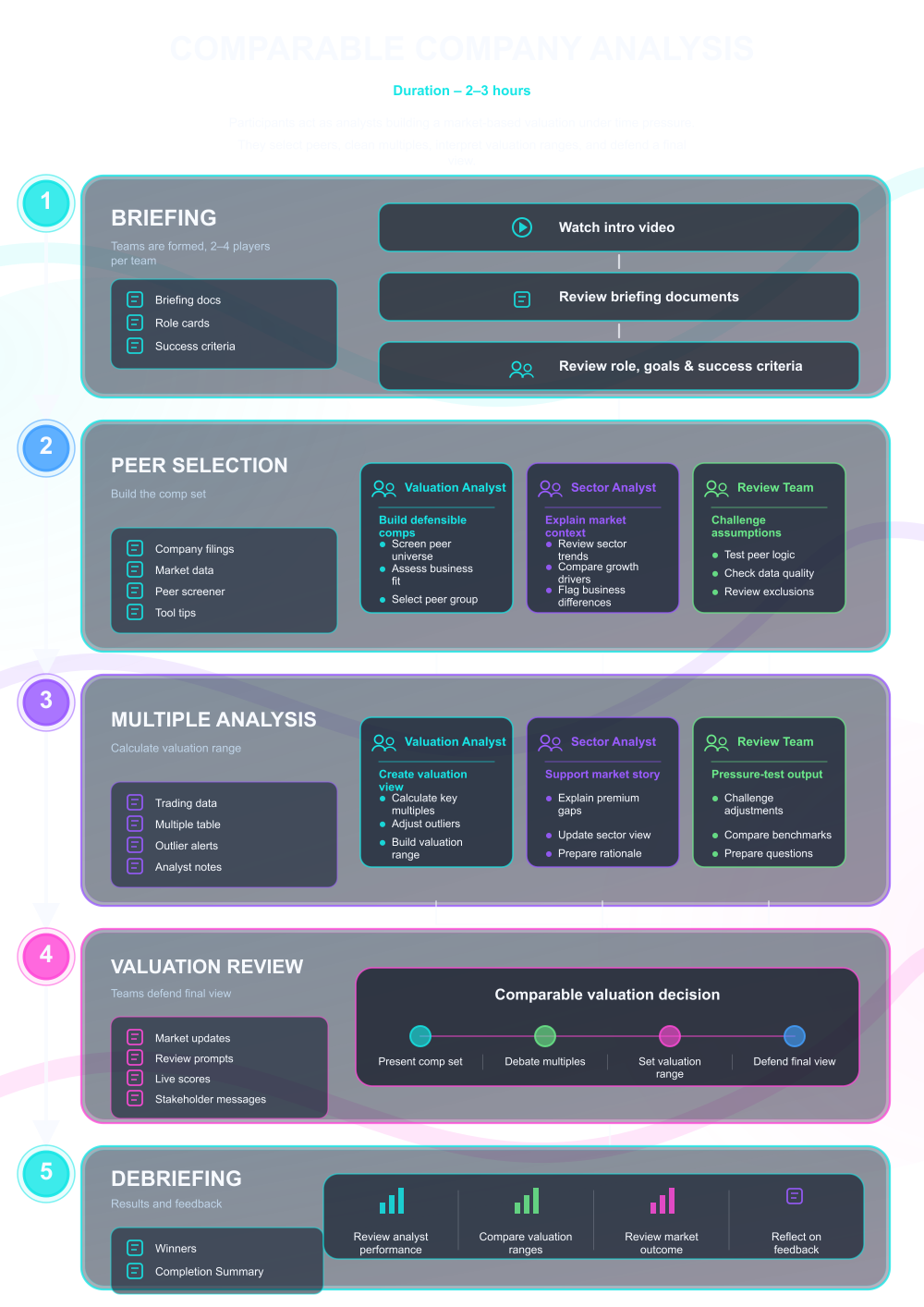

What Participants Do
During the simulation, participants will:
- Review the provided data including target company financials, peer company data, industry metrics, consensus estimates.
- Define a criteria to include or exclude peer firms (size, region, business mix).
- Compute multiples, adjust and normalize for non-recurring items, outliers, accounting differences, and unique attributes.
- Prepare and present a short report or pitch defending the chosen peer group, multiples, assumptions, and valuation range.
- Present to a mock “client team” or instructors and respond to skepticism or counterarguments.

Learning Objectives
By the end of the simulation, participants will be able to:
- Understand the process and methodology of comparable company valuation
- Select and defend an appropriate peer group
- Normalize and adjust financial metrics to make firms comparable
- Compute and trim valuation multiples meaningfully
- Apply discounts, premiums, or adjustments for idiosyncratic differences
- Derive a defensible valuation range for the target company
- Perform sensitivity analysis and stress tests on valuation assumptions
- Communicate valuation rationale and defend assumptions to stakeholders
- Recognize the limitations, risks, and caveats of relying solely on multiples
- Integrate peer valuation with other valuation methods (DCF, precedent deals)
- Adapt valuation judgments under market or news shocks
- Enhance analytical rigor, narrative judgment, and presentation skills
The simulation’s flexible structure ensures that these objectives can be calibrated to match the depth, duration, and focus areas of each program, whether in higher education or corporate learning.
How the Comparable Company Analysis Simulation Works
This simulation can be run individually or in teams in academic or corporate contexts. Each cycle represents a stage of preparing an analysis.
1. Receive a Scenario or Brief: Participants receive target company financials, peer company data, industry metrics, consensus estimates.
2. Analyse the Situation: They review the data to identify peer firms and then derive key ratios (EV/EBITDA, P/E, EV/Sales, etc.) for the target company.
3. Collaborate and Debate: In team formats, participants compare interpretations and challenge each other’s conclusions.
4. Draft a report: Participants revise their peer group, adjust multiples, re-run valuation models, and refine their report.
5. Communicate Findings: Participants present their valuation memo to a “client panel” (instructor or peers). They must defend their peer selection, multiple application, adjustments, and sensitivity cases.
6. Review and Reflect: Feedback highlights defensibility, consistency, risk assessment, and clarity of narrative.
Frequently Asked Questions
Assessment
Assessment can be tailored to focus on analytical accuracy, ethical judgment, and communication. Participants may be evaluated on:
- Accuracy in judgement of company’s assets and quality of assumptions and adjustments
- Depth and logic of scenario analysis and sensitivity ranges
- Clarity, coherence, and persuasiveness of the valuation memo and presentation
- Ability to adapt and revise valuations in light of news shocks or changes
- Collaboration, division of work, integration of roles, and final coherence
- Rating by peers and self-reflection on approach and decisions
Assessment can combine numeric scoring, qualitative feedback, peer review, and instructor debriefing. This flexibility allows the simulation to serve both graded university courses and corporate finance training environments.