While designed with finance roles in mind (IB, PE, ER, CorpFin), it is highly beneficial for anyone in a business environment who needs to communicate complex information, including consultants, engineers, and project managers.

Communication Skills Simulation
In the high-stakes world of finance, technical prowess is only half the battle. The ability to communicate complex ideas clearly, persuade stakeholders, and build consensus is what separates good financiers from great leaders.

Communication Skills Simulation Overview
In the Communication Skills in Finance Simulation participants are tasked with navigating a series of realistic financial challenges: from pitching an investment idea to a skeptical board to negotiating deal terms and explaining a complex restructuring plan to investors.
Success is not just measured by the numerical outcome, but by the clarity, persuasiveness, and professionalism of their communication. Through role-playing, peer feedback, and expert evaluation, participants will refine their ability to structure arguments, tailor messages to different audiences, and deliver impactful presentations under pressure.
Although ideal for undergraduate and graduate finance courses, executive training, and corporate finance skill workshops, the simulation is modular and scalable, allowing instructors to vary complexity.

Communication Skills Simulation Concepts
Participants work through realistic scenarios, which can be customized to emphasize or exclude specific topics depending on the learning goals. This modular structure allows the simulation to be tailored to any type of session. Key concepts include:
- Audience Tailoring
- The Pyramid Principle
- Storytelling with Data
- Persuasion and Influence
- Active Listening & Questioning
- Handling Q&A and Objections
- Non-Verbal Communication
- Crisis Communication

Gameflow
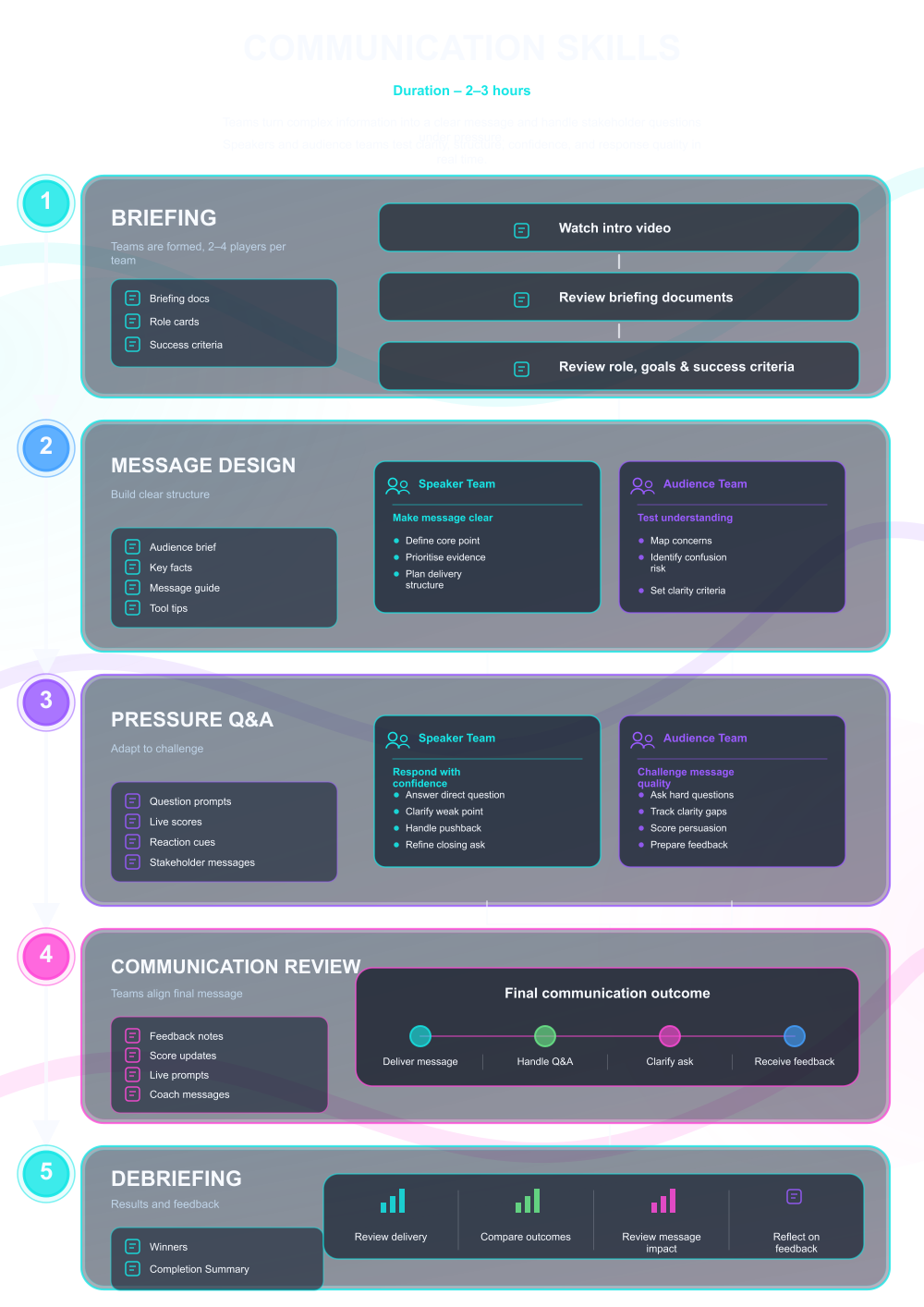

What Participants Do
In the simulation, participants will:
- Craft and deliver a formal investment pitch to a simulated investment committee.
- Role-play one-on-one negotiation sessions to reach a mutually beneficial agreement.
- Draft a concise and clear executive summary for a complex transaction.
- Participate in a simulated earnings call, answering challenging questions from "analysts."
- Lead a team meeting to align on strategy and delegate tasks under a tight deadline.
- Provide and receive constructive peer feedback on communication style and effectiveness.

Learning Objectives
By the end of the simulation, participants will be able to:
- Structure financial presentations for clarity, logic, and persuasive impact.
- Confidently articulate and defend financial recommendations to senior management.
- Negotiate key terms in deals and financings more effectively.
- Translate technical jargon into accessible language for non-expert audiences.
- Demonstrate improved active listening and questioning skills.
- Manage stress and maintain composure during high-stakes communications.
- Create presentation decks and supporting materials that enhance, rather than distract from, the core message.
How the Communication Skills Simulation Works
This simulation can be run individually or in teams in academic or corporate contexts. Each cycle represents a stage of getting through a pressing financial situation.
1. Introduction and Briefing Participants are introduced to their fictional company and the specific communication challenge (M&A deal announcement, fundraising pitch).
2. Preparation They receive a packet of financial data, background information, and specific objectives. They must prepare their presentation, talking points, or documents.
3. The Simulation Round Participants engage in the live simulation, which may involve a video-recorded presentation, a live video-call negotiation with another participant or a written deliverable.
4. Feedback and Evaluation Participants receive multi-source feedback. This includes analytics on their speech (pace, use of filler words), scored rubrics from peers, and qualitative feedback from instructors.
5. Debrief and Playback The platform allows participants to watch a recording of their performance, compare it against the feedback, and reflect on their strengths and areas for improvement. Instructors lead a guided debrief to solidify key lessons.
Frequently Asked Questions
Assessment
Assessment of participant performance can be tailored according to the host institution’s objectives (business school, corporate training, assessment centre). Typical assessment criteria include:
- Persuasive Pitch Deck
- Live Presentation and Delivery
- Negotiation and Q&A Performance
- Peer Feedback Quality
- Final Written Executive Summary
Assessment may incorporate peer and self-review components, facilitator scoring, and debrief discussion. Results may feed into grades, executive feedback, certification or development plans.