It is ideal for students and professionals in finance, economics, and business, as well as anyone seeking a career in trading, asset management, or corporate finance within commodity-intensive industries.

Commodity Analyst Simulation
The Commodity Analyst Simulation plunges participants into the high-stakes world of raw materials trading. Learn to navigate the volatile and complex global commodity markets, where economic data drives prices.

Commodity Analyst Simulation Overview
The Commodity Analyst Simulation is a dynamic, online-based learning experience that replicates the real-world challenges faced by analysts at trading desks, hedge funds, and corporate hedging departments. Participants are tasked with generating alpha and managing risk by building and managing a portfolio of key commodities such as crude oil, natural gas, gold, copper, and agricultural products.
Over multiple simulated periods, you will be bombarded with a constant stream of real-time news, economic data, and market-moving reports. You must learn to filter the noise, identify significant trends, and execute trades based on your fundamental and technical analysis. The simulation emphasizes the critical link between macro events, supply/demand dynamics, and price action, fostering a deep, intuitive understanding of the commodity cycle.
Although ideal for undergraduate and graduate finance courses, executive training, and corporate finance skill workshops, the simulation is modular and scalable, allowing instructors to vary complexity.

Commodity Analyst Simulation Concepts
Participants work through realistic scenarios, which can be customized to emphasize or exclude specific topics depending on the learning goals. This modular structure allows the simulation to be tailored to any type of session. Key concepts include:
- Fundamental Analysis
- Geopolitical and Event Risk
- Term Structure and Futures Curves
- Macroeconomic Indicators
- Technical Analysis
- Risk Management and Position Sizing
- The Role of the USD
- Correlations and Spreading

Gameflow

What Participants Do
In the simulation, participants will:
- Analyze real-time news feeds and economic calendars for market-moving events.
- Conduct in-depth research on assigned commodities, building a fundamental view.
- Execute buy and sell orders for futures contracts and options across the energy, metals, and agriculture complexes.
- Monitor and manage a live portfolio, adjusting positions based on market developments.
- Write and present concise trade recommendations and market commentary, justifying their thesis.
- Compete against peers in a live leaderboard, simulating the performance pressure of a real trading floor.

Learning Objectives
By the end of the simulation, participants will be able to:
- Articulate the primary drivers of value for major global commodities.
- Analyze the impact of geopolitical and macroeconomic events on commodity prices.
- Develop and execute a disciplined trading strategy based on fundamental and technical analysis.
- Construct and manage a diversified commodity portfolio while actively managing risk.
- Interpret the term structure of futures markets and understand its implications.
- Communicate complex market views and trade rationales effectively and persuasively.
How the Commodity Analyst Simulation Works
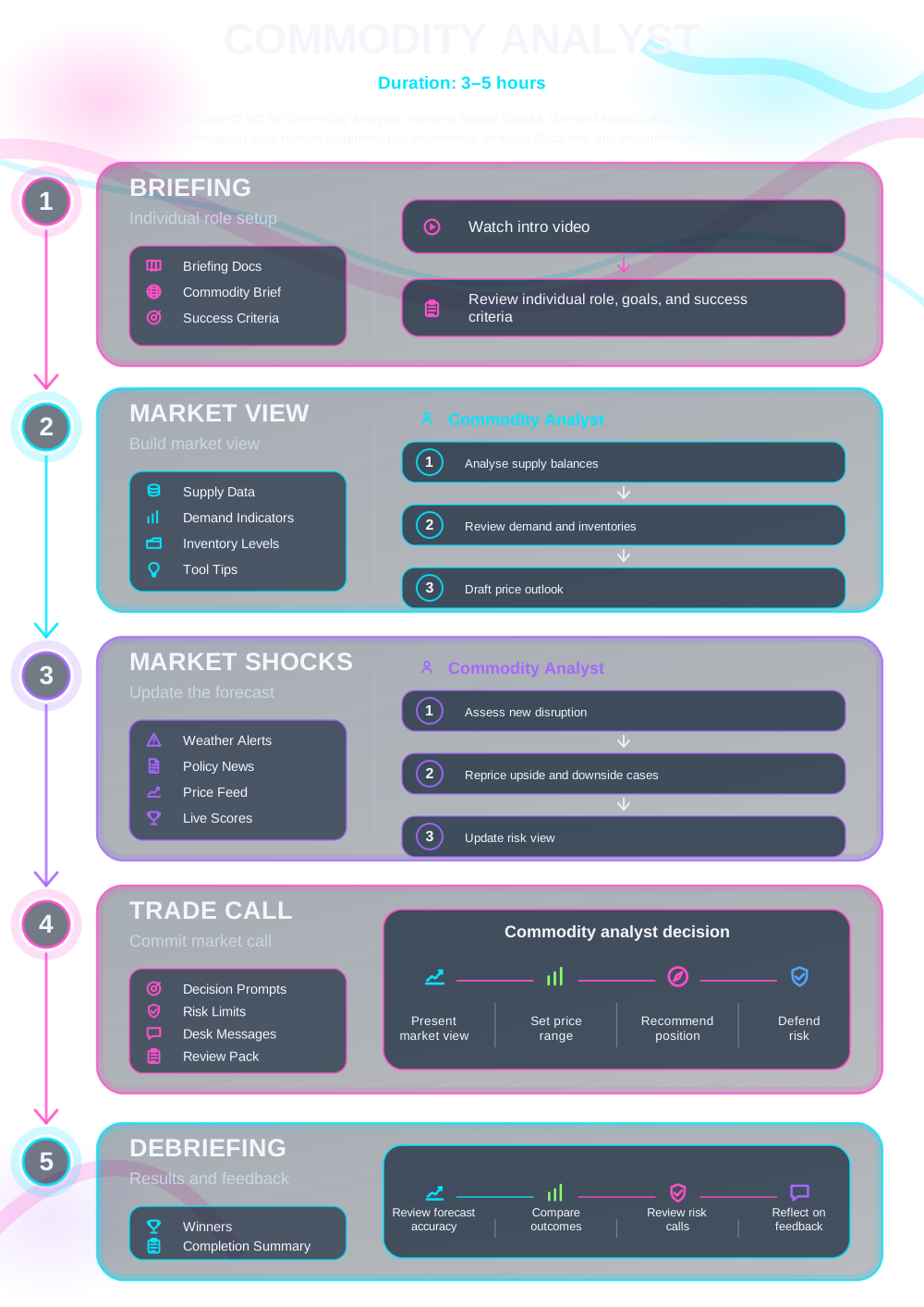
This simulation can be run individually or in teams in academic or corporate contexts. Each cycle represents a stage of getting through a pressing financial situation.
1. Introduction and Training Participants are introduced to the trading platform and the core concepts of commodity markets through guided tutorials.
2. Market Analysis Each round begins with a news cycle and new economic data. Participants analyze this information to form a market view.
3. Trade Execution Based on their analysis, participants execute trades, choosing the commodity, contract month, and position size.
4. Portfolio Management As the simulation progresses, new events unfold. Participants must monitor their positions, manage risk, and decide whether to hold, add to, or exit trades.
5. Reporting and Debrief Participants may be required to submit a brief report outlining their strategy and performance. The session concludes with an instructor-led debrief analyzing market outcomes and key learning moments.
Frequently Asked Questions
Assessment
Assessment of participant performance can be tailored according to the host institution’s objectives (business school, corporate training, assessment centre). Typical assessment criteria include:
- Trading Performance is based on the Sharpe Ratio or a similar metric to reward consistent, smart risk-taking over reckless gambling.
- Evaluation of the participant's ability to articulate their overall strategy, analyze their trades, and explain their successes and failures.
- Active engagement in debriefs and maintaining a log of trades with rationales.
- Feedback from teammates on collaboration and contribution (if a team-based simulation).