It's ideal for participants interested in investment banking (restructuring groups), credit analysis, hedge funds (distressed debt), private equity, and corporate turnaround management.

Claims Modeling Simulation
Students master corporate financial analysis and risk assessment by actively managing and resolving complex financial claims scenarios.

Claims Modeling Simulation Overview
Participants step into the high-stakes role of a financial claims analyst or restructuring advisor. Each simulation round presents new, complex scenarios where they must quantify, value, and negotiate financial claims.
They navigate intricate capital structures, analyze legal documentation, and balance the competing interests of different creditor classes to maximize recovery value. This simulation emphasizes precision, strategic foresight, and rigorous financial modeling under pressure, bringing the intense world of claims analysis and corporate restructuring to life.
This simulation is ideal for university finance programs and professional training workshops focused on credit analysis, distressed debt, restructuring, and investment banking. It shows how legal standing, financial priority, and negotiation strategy interact to determine real-world recovery outcomes.

Claims Modeling Simulation Concepts
Participants work through realistic scenarios, which can be customized to emphasize or exclude specific topics depending on the learning goals. This modular structure allows the simulation to be tailored to any type of session. Key concepts include:
- Understanding capital structure priority
- Legal documentation analysis
- Financial modeling for recovery valuation
- Negotiation strategy in creditor committees
- Bankruptcy and insolvency processes
- Valuation of distressed assets
- Intercreditor dynamics and conflicts
- Ethical considerations in restructuring
- Structuring settlement proposals
- Communication with stakeholders in high-pressure situations

Gameflow
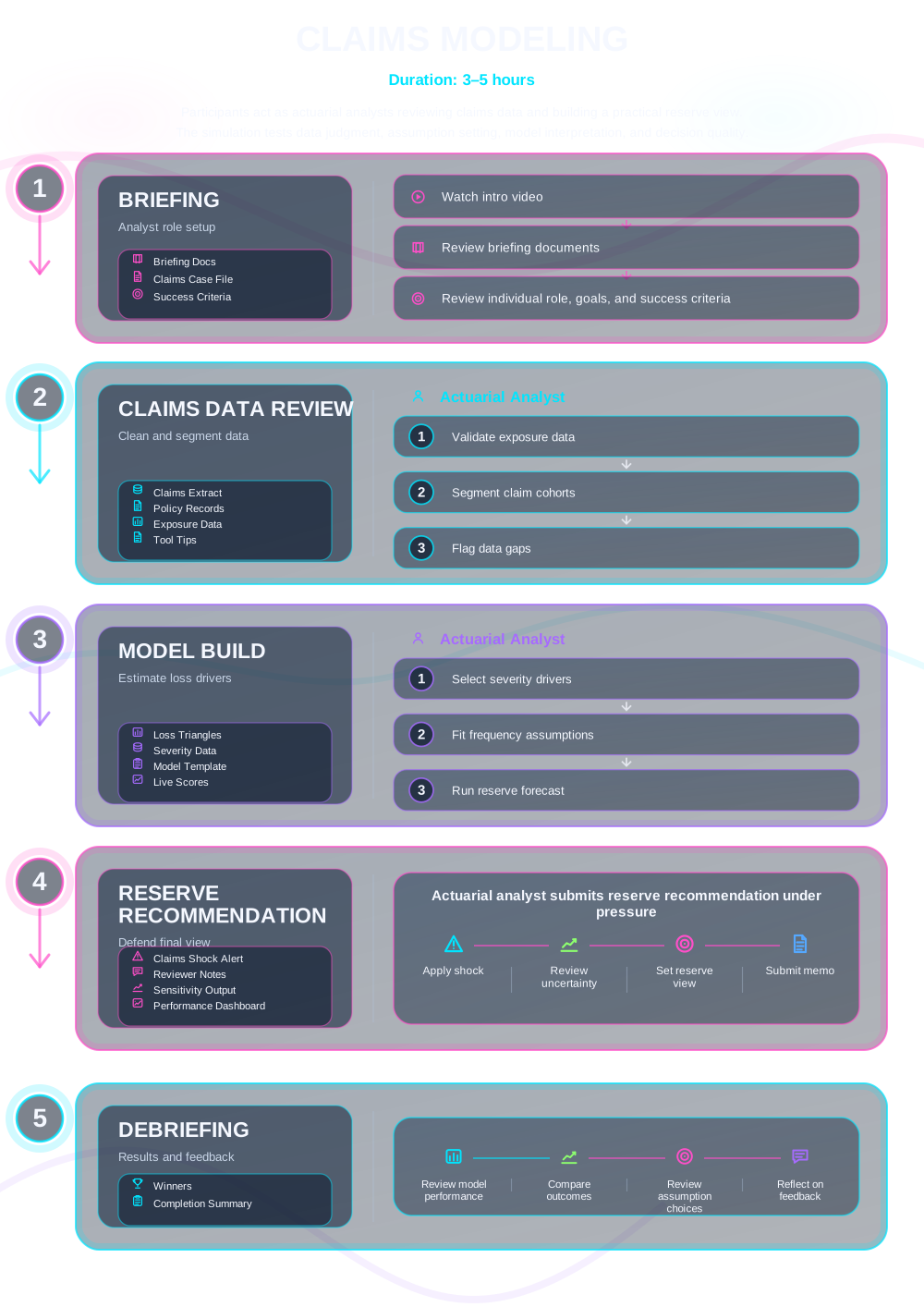

What Participants Do
In the simulation, participants will:
- Analyze a distressed company's capital structure and legal documents.
- Build financial models to estimate recovery values under different scenarios.
- Prioritize claims based on seniority and security.
- Formulate and negotiate restructuring proposals with other parties.
- Respond to new information, such as asset sales or changes in market conditions.
- Advocate for their client's or creditor class's position to maximize returns.

Learning Objectives
By the end of the simulation, participants will be able to:
- Understand the hierarchy of claims in a corporate capital structure.
- Apply financial modeling techniques to value distressed assets and estimate recovery.
- Analyze legal covenants and their impact on recovery prospects.
- Develop strategic negotiation tactics for restructuring discussions.
- Navigate the key stages of formal bankruptcy or informal restructuring processes.
- Communicate complex financial and legal positions clearly to stakeholders.
- Balance analytical rigor with strategic compromise to achieve viable solutions.
- Build confidence in handling high-stakes financial distress situations.
How the Claims Modeling Simulation Works
This simulation can be run individually or in teams in academic or corporate contexts. Each cycle represents a stage of getting through a pressing financial situation.
1. Receive a Case Brief Participants are introduced to a distressed company, its capital structure, and the key issues.
** 2. Analyze the Situation** They review financial statements, debt documents, asset valuations, and market data.
3. Model and Strategize Participants build recovery models, determine their bargaining position, and develop a negotiation strategy.
4. Collaborate and Negotiate Teams engage with other creditor groups to propose and debate restructuring plans.
5. Communicate Outcomes Participants present final settlement proposals or advisor recommendations.
6. Review and Reflect Feedback highlights recovery outcomes, negotiation effectiveness, and strategic choices. Strategies evolve across rounds.
Frequently Asked Questions
Assessment
Assessment of participant performance can be tailored according to the host institution’s objectives (business school, corporate training, assessment centre). Typical assessment criteria include:
- Accuracy and depth of the financial recovery model.
- Strategic rationale for negotiation positions and concessions.
- Effectiveness in achieving favorable recovery terms for their assigned role.
- Clarity and persuasiveness in communicating proposals.
- Collaboration and adaptability during negotiation rounds.