While M&A simulations focus on buying or merging entire companies, this carve-out simulation deals with the complexities of separating a business unit from its parent, creating a new standalone entity, and establishing its value from the ground up. It involves unique challenges like TSAs, separation costs, and crafting a new equity story.

Carve-out Simulation
This simulation plunges participants into the heart of a live carve-out transaction, challenging them to navigate the financial, strategic, and operational hurdles to unlock hidden value.

Carve-out Simulation Overview
In this intensive simulation, participants step into the role of investment bankers and corporate development professionals tasked with executing a carve-out of a non-core business unit from a large, diversified parent company. The process involves far more than a simple asset sale; it requires establishing a standalone, viable entity ready for a future as an independent public company or a sale to a strategic buyer.
A carve-out is one of the most complex and high-stakes strategic maneuvers in corporate finance. Teams will be confronted with the real-world challenges of separation: from allocating shared liabilities and IT systems to creating a new capital structure and crafting an equity story that resonates with the market.
This hands-on experience covers the full transaction lifecycle, from initial feasibility analysis and financial modeling to the final investor roadshow, providing an unparalleled deep dive into the mechanics of corporate separation.

Carve-out Simulation Concepts
Participants work through realistic scenarios, which can be customized to emphasize or exclude specific topics depending on the learning goals. This modular structure allows the simulation to be tailored to any type of session. Key concepts include:
- Carve-out Structuring
- Financial Modeling and Valuation
- Standalone Entity Creation:
- Separation Costs and Synergies
- Capital Structure Design
- TSA (Transition Service Agreements)
- Equity Story Crafting
- IPO Preparation and Roadshow

Gameflow
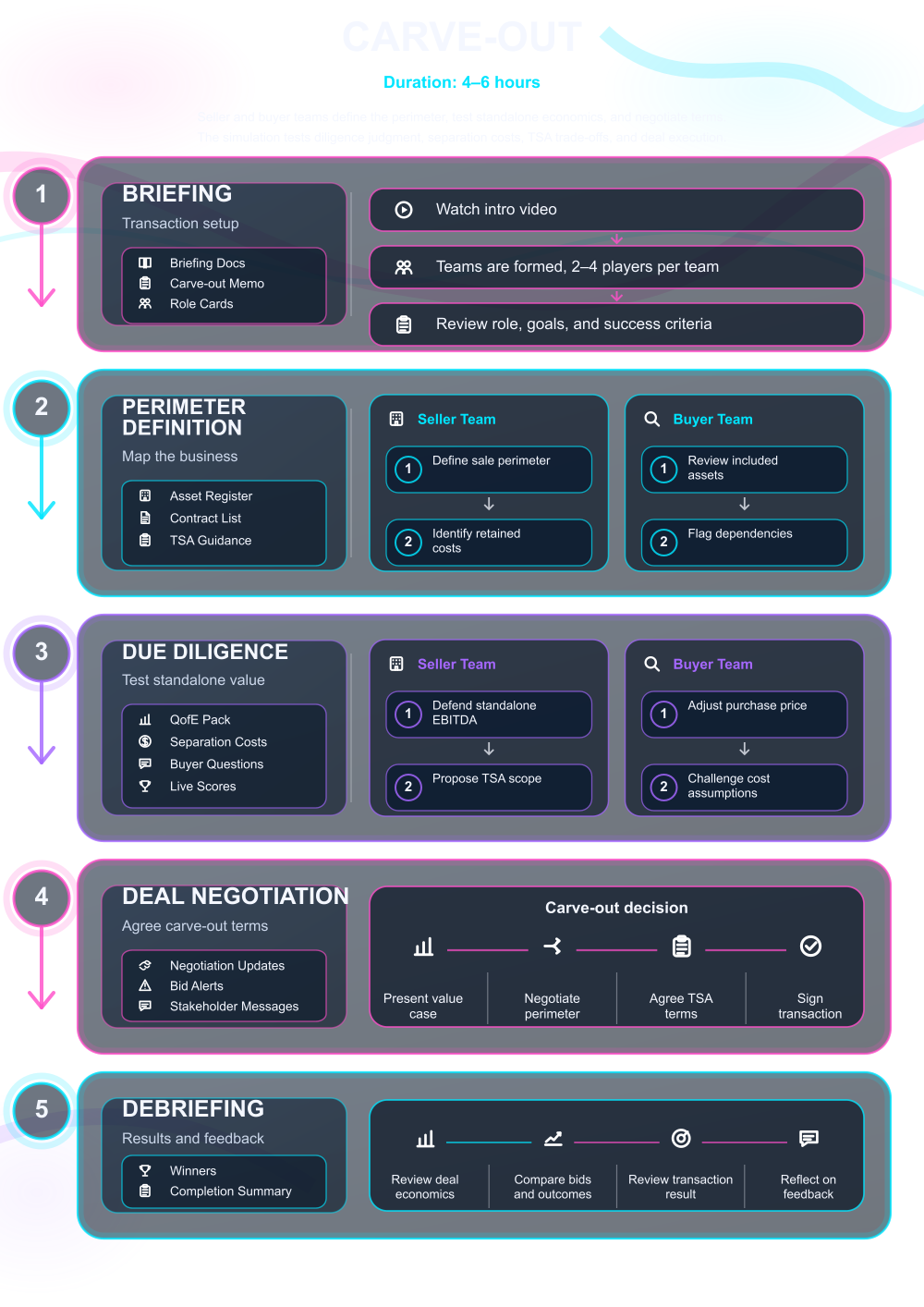

What Participants Do
In the simulation, participants will:
- Analyze the parent company and the business unit to be carved out.
- Build a fully integrated financial model to project the standalone performance of the new entity.
- Value the carve-out using multiple methodologies (DCF, Comparables, Precedent Transactions).
- Design an optimal capital structure, including the appropriate level of debt.
- Negotiate the terms of Transition Service Agreements (TSAs) with the parent company team.
- Calculate one-time separation costs and manage a separation budget.
- Create a compelling investor presentation and equity story.
- Pitch the investment opportunity in a final "roadshow" to a panel of "investors".

Learning Objectives
By the end of the simulation, participants will be able to:
- Understand the strategic rationale and entire process of executing a corporate carve-out.
- Construct a comprehensive financial model to analyze and value a standalone business unit.
- Evaluate and design an appropriate capital structure for a newly independent company.
- Identify and quantify the major financial, operational, and legal complexities of a separation.
- Develop and articulate a persuasive investment thesis for a carve-out transaction.
- Enhance critical skills in financial analysis, negotiation, and strategic communication.
How the Carve-out Simulation Works
This simulation can be run individually or in teams in academic or corporate contexts. Each cycle represents a stage of getting through a pressing financial situation.
1. Team Formation and Briefing Participants are divided into teams representing the investment bank advising on the carve-out. They receive a detailed case study featuring the parent company's financials, the business unit's data, and market information.
2. Analysis and Modeling Teams analyze the case materials, build a three-statement financial model for the carve-out, and perform a preliminary valuation.
3. Structuring and Strategy Teams design the carve-out structure, propose a capital structure, and develop a strategic plan for the separation, including a TSA negotiation with another team representing the parent company.
4. Investor Preparation Teams synthesize their analysis into a professional investor presentation (pitchbook), crafting a clear equity story and investment rationale.
5. Final Presentation (The Roadshow) Teams present their carve-out proposal and investment pitch to a panel of instructors acting as the board of the parent company and potential investors, defending their analysis and recommendations.
6. Debrief and Feedback A comprehensive instructor-led debrief reviews the key learning points, financial model choices, and strategic decisions made by each team.
Frequently Asked Questions
Assessment
Assessment of participant performance can be tailored according to the host institution’s objectives (business school, corporate training, assessment centre). Typical assessment criteria include:
- Accuracy and integrity of the integrated three-statement model.
- Appropriateness of valuation assumptions and methodologies.
- Clarity and professionalism of the model's structure.
- Strength and clarity of the investment thesis and equity story.
- Coherence of the strategic and financial rationale.
- Professionalism of slide design and data visualization.
- Effectiveness of the oral presentation and delivery.
- Ability to handle Q&A and defend recommendations convincingly.
- Peer and facilitator assessment of individual participation and teamwork.