It's ideal for MBA students, communication majors, business executives, PR professionals, and anyone seeking to master strategic corporate communication.

Business Communications Simulation
In this Business Communications Simulation, participants craft strategies, manage crises, deliver persuasive pitches, and protect organizational reputation in dynamic, competitive business scenarios.

Business Communications Simulation Overview
Participants assume the role of communication directors and corporate strategists navigating the complex landscape of internal and external stakeholder management. Each simulation round introduces realistic challenges: sudden PR crises, earnings call preparations, merger announcements, internal change management initiatives, or competitive market attacks.
Teams must analyze stakeholder sentiments, craft multi-channel messaging, allocate limited resources, and make critical decisions under tight deadlines and public scrutiny. The simulation emphasizes strategic alignment, ethical considerations, and the tangible impact of communication on financial performance, employee morale, and brand equity.
This immersive simulation is ideal for university business programs, executive communication workshops, leadership development, and corporate training. It transforms abstract communication theory into practical, impactful decision-making, demonstrating how strategic messaging directly influences business outcomes.

Business Communications Simulation Concepts
Participants work through realistic scenarios, which can be customized to emphasize or exclude specific topics depending on the learning goals. This modular structure allows the simulation to be tailored to any type of session. Key concepts include:
- Stakeholder analysis and mapping
- Crisis communication and reputation management
- Internal communications and change leadership
- Financial communications (earnings, M&A, investor relations)
- Persuasive pitching and presentation skills
- Cross-cultural and global communication strategies
- Digital and social media strategy
- Media relations and press conference simulation
- Message development and channel selection
- Measuring communication effectiveness and ROI
- Ethical dilemmas in corporate communications

Gameflow
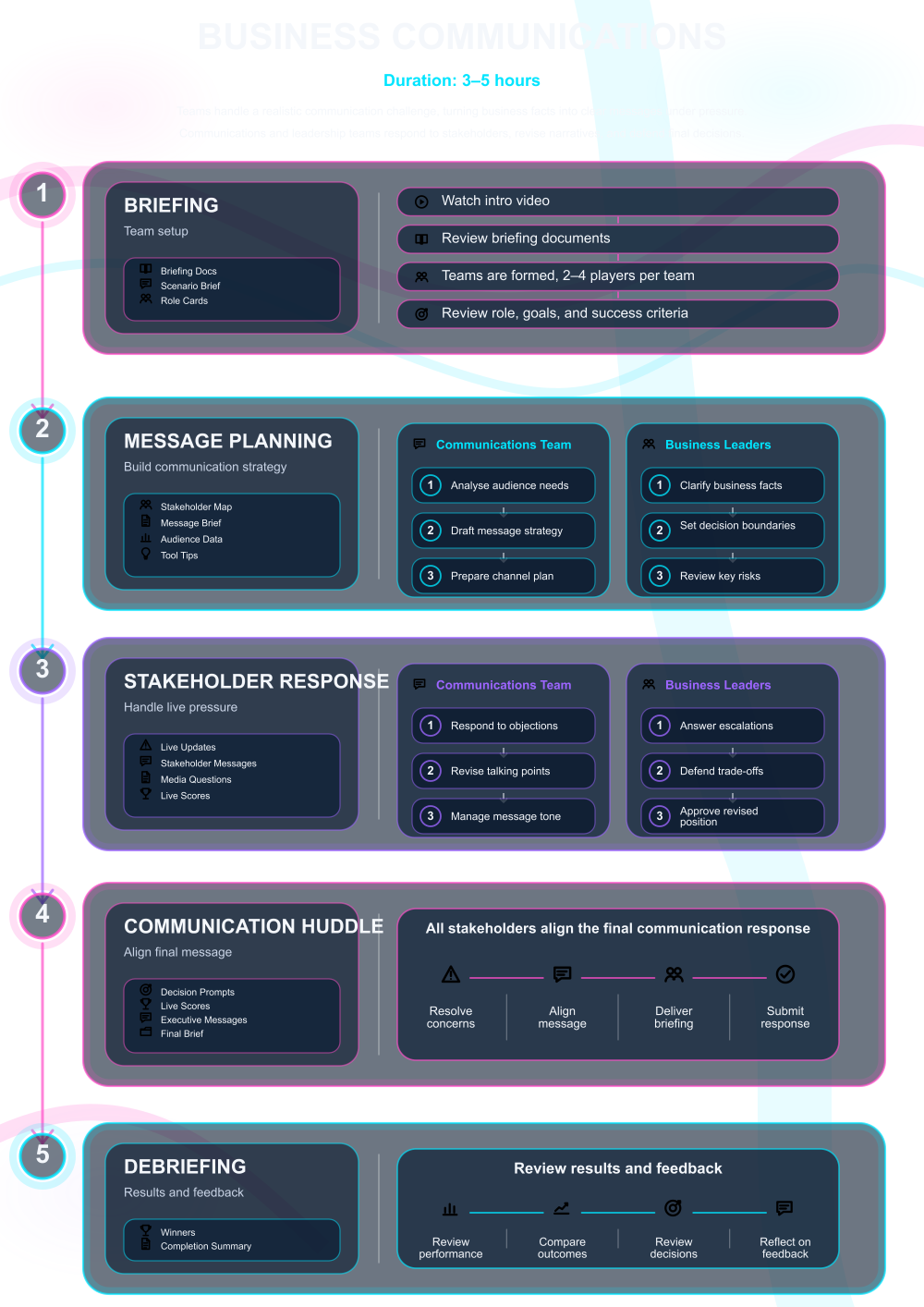

What Participants Do
In the simulation, participants will:
- Analyze complex business situations and stakeholder landscapes.
- Develop and execute integrated communication strategies.
- Draft key messages, press releases, and internal announcements.
- Manage simulated media interactions and Q&A sessions.
- Allocate budgets across communication channels and initiatives.
- Navigate and respond to unfolding crises in real-time.
- Present strategies and results to senior leadership (or the class).
- Reflect on the outcomes of their decisions and adapt their approach.

Learning Objectives
By the end of the simulation, participants will be able to:
- Develop and execute a comprehensive business communication strategy.
- Navigate high-pressure crisis scenarios to protect organizational reputation.
- Craft clear, persuasive messages tailored to diverse stakeholder groups.
- Understand the financial and operational impact of communication decisions.
- Make ethical communication choices under pressure.
- Effectively utilize different communication channels and tools.
- Deliver confident and compelling presentations and pitches.
- Collaborate within a team to manage complex communication projects.
- Apply theoretical communication frameworks to realistic business challenges.
How the Business Communications Simulation Works
This simulation can be run individually or in teams in academic or corporate contexts. Each cycle represents a stage of getting through a pressing financial situation.
1. Receive the Brief Teams are introduced to their company, its current challenge (e.g., product recall, merger announcement), and key objectives.
** 2. Analyze the Environment They assess stakeholder profiles, media sentiment, internal culture, and competitive landscape.
3. Make Strategic Decisions Teams allocate resources, craft core messages, choose dissemination channels, and prepare spokespersons.
4. Engage and Execute They respond to inbound media queries, address employee concerns, and manage social media reactions.
5. Review Outcomes The simulation engine provides feedback on media coverage, stock price impact, employee sentiment, and public perception.
6. Adapt and Advance Based on results, teams refine their strategy for the next round, facing new developments and consequences of their prior actions.
Frequently Asked Questions
Assessment
Assessment of participant performance can be tailored according to the host institution’s objectives (business school, corporate training, assessment centre). Typical assessment criteria include:
- The effectiveness and coherence of their communication strategy.
- The quality and appropriateness of key messaging and materials.
- The results achieved across reputation, stakeholder trust, and business metrics.
- Their adaptability and decision-making under pressure.
- The clarity, persuasiveness, and professionalism of their final presentations.
- Peer and self-assessment scores on collaboration and contribution.