It is ideal for MBA students, advanced undergraduate business students, and professionals in leadership development or executive education programs.

Business Administration Simulation
In this comprehensive Business Administration Simulation, participants analyze markets, allocate resources, navigate financial challenges, and lead cross-functional teams to achieve sustainable growth and outperform competitors.

Business Administration Simulation Overview
This simulation provides a holistic, dynamic experience of running a company. Participants take on the leadership of a multi-divisional organization operating in a competitive, evolving marketplace. Each decision cycle mirrors a fiscal quarter, introducing new variables such as shifting consumer demand, economic fluctuations, supply chain disruptions, and aggressive competitive moves.
Teams must synthesize information from all areas of business—from marketing and operations to finance and human resources—to formulate and execute a coherent strategy. They will set product prices, manage production capacity, invest in R&D and marketing, secure financing, and make strategic hires. The core challenge lies in balancing short-term profitability with long-term strategic positioning, all while maintaining healthy cash flow and responding to external shocks.
This simulation is ideal for MBA programs, executive education, and corporate training workshops, as it bridges the gap between theoretical business concepts and the pressured, integrative decision-making required of real-world leaders.

Business Administration Simulation Concepts
Participants work through realistic scenarios, which can be customized to emphasize or exclude specific topics depending on the learning goals. This modular structure allows the simulation to be tailored to any type of session. Key concepts include:
- Integrated Business Strategy
- Financial Management and Analysis
- Marketing Strategy and ROI
- Operations and Supply Chain Management
- Financial Planning and Capital Budgeting
- Human Resources and Organizational Leadership
- Competitive Analysis and Market Dynamics
- Risk Management and Decision-Making Under Uncertainty
- Corporate Finance
- Performance Measurement

Gameflow
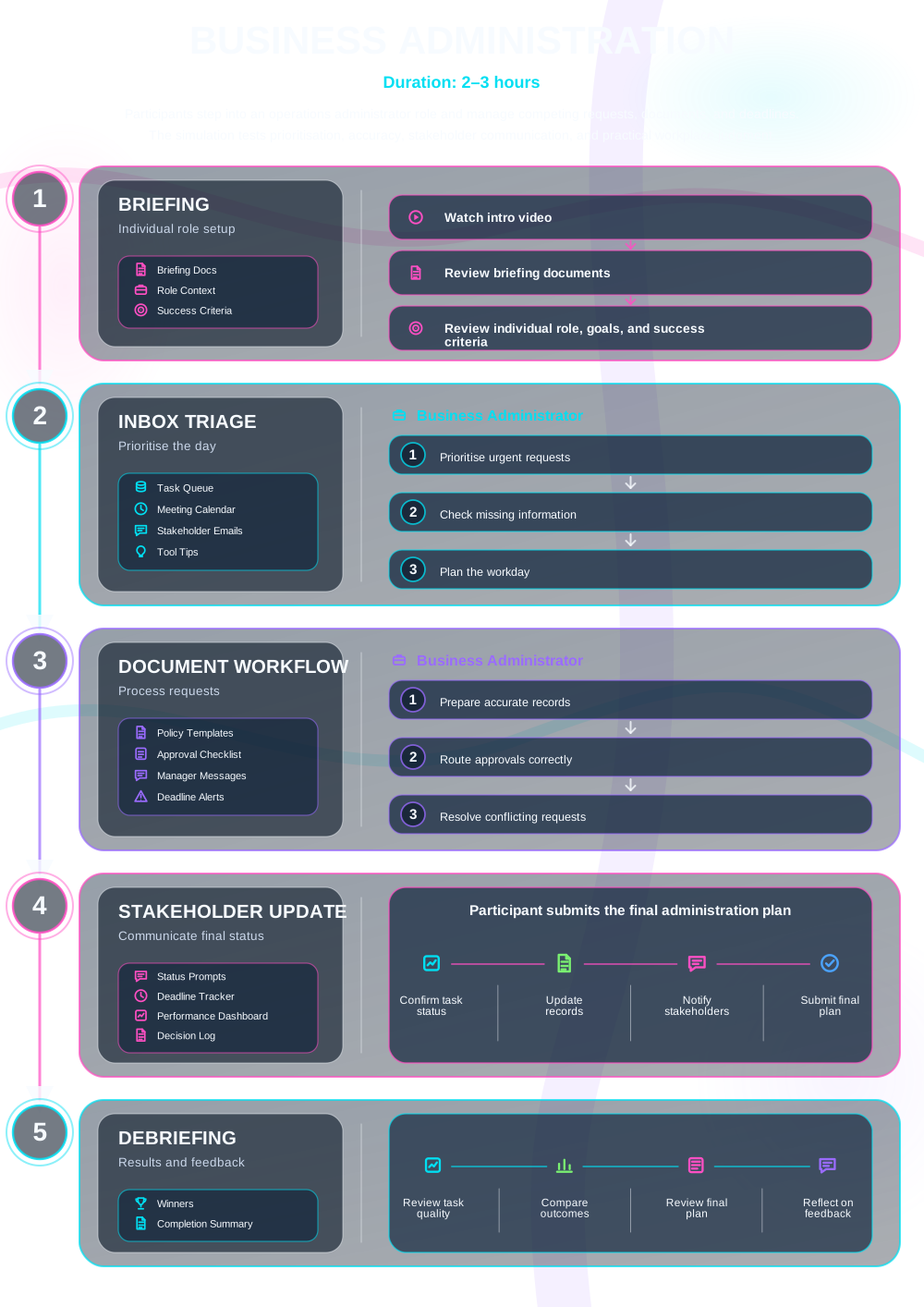

What Participants Do
In the simulation, participants will:
- Analyze comprehensive market research, financial reports, and competitor intelligence.
- Formulate a multi-period corporate strategy covering all business functions.
- Make quarterly operational decisions on production, pricing, marketing, and HR.
- Manage the company's finances, including budgeting, financing, and investment.
- Negotiate with other teams for resources, partnerships, or in competitive scenarios.
- Respond to unexpected economic news, crises, and market opportunities.
- Present their strategic rationale and business results to the "board" (instructors and peers).
- Critically evaluate their performance and adapt their strategy each round.

Learning Objectives
By the end of the simulation, participants will be able to:
- Understand the interconnections between all functional areas of a business.
- Apply strategic frameworks to analyze industries and competitive positioning.
- Interpret financial statements and use financial data for strategic decision-making.
- Allocate scarce resources to maximize firm value and achieve strategic goals.
- Develop actionable plans that translate strategy into operational decisions.
- Evaluate the financial and strategic impact of marketing and operational choices.
- Work effectively in a team to lead an organization under pressure.
- Communicate business strategies and results clearly and persuasively.
- Build confidence in making complex, high-stakes business decisions.
How the Business Administration Simulation Works
This simulation can be run individually or in teams in academic or corporate contexts. Each cycle represents a stage of getting through a pressing financial situation.
1. Receive the Business Case Teams are introduced to their company's starting position, market data, and historical performance.
** 2. Strategic Planning Session** Teams analyze their situation, set long-term goals, and plan their first set of moves.
3. Make Quarterly Decisions Each round, teams input decisions for all business functions into the simulation platform within a set time.
4. Generate and Review Results The simulation processes all team decisions, simulating market competition. Teams receive detailed financial statements and market share reports.
5. Analyze and Adapt Teams analyze their performance relative to competitors, identify what worked or failed, and adjust their strategy for the next round.
6. Present and Debrief After multiple decision rounds, teams present their strategic journey. A facilitator-led debrief connects the simulation experience to core business administration theories and principles.
Frequently Asked Questions
Assessment
Assessment of participant performance can be tailored according to the host institution’s objectives (business school, corporate training, assessment centre). Typical assessment criteria include:
- Profitability, market share growth, financial health, and shareholder value creation.
- The clarity and consistency of strategy across decision rounds.
- Quality of budgeting, investment, and financing choices.
- Ability to work as a unit and pivot strategy based on results.
- Persuasive articulation of the business strategy and lessons learned.