It is ideal for university students in public administration, business, and economics, as well as early-career professionals in government, non-profit management, and corporate roles involving budget planning.

Budget Analyst Simulation
The Budget Analyst Simulation plunges participants into the high-stakes world of public finance. Experience first-hand the challenges and trade-offs involved in crafting a municipal budget that balances fiscal responsibility with constituent needs.

Budget Analyst Simulation Overview
In the Budget Analyst Simulation, participants step into the role of a Budget Analyst for a growing city, "Metropolisville". They are tasked with developing the annual operating budget for the upcoming fiscal year. Participants will face competing demands from various city departments, pressure from city council members with different priorities, and a hard constraint from the Mayor's office to avoid a tax increase.
The simulation presents a realistic financial model of the city, including revenue projections from taxes, fees, and state/federal aid, as well as detailed expenditure requests from Police, Fire, Parks and Recreation, Public Works, and more. Your mission is to analyze these requests, identify potential efficiencies, and make strategic recommendations to close a projected budget gap, all while maintaining essential services and fostering community well-being.
Although ideal for undergraduate and graduate finance courses, executive training, and corporate finance skill workshops, the simulation is modular and scalable, allowing instructors to vary complexity.

Budget Analyst Simulation Concepts
Participants work through realistic scenarios, which can be customized to emphasize or exclude specific topics depending on the learning goals. This modular structure allows the simulation to be tailored to any type of session. Key concepts include:
- Public Sector Budgeting Cycle
- Incremental vs. Zero-Based Budgeting
- Fiscal Constraints and Budget Gaps
- Cost-Benefit Analysis
- Stakeholder Management
- Operational vs. Capital Expenditures
- Revenue Forecasting
- Performance-Based Budgeting

Gameflow
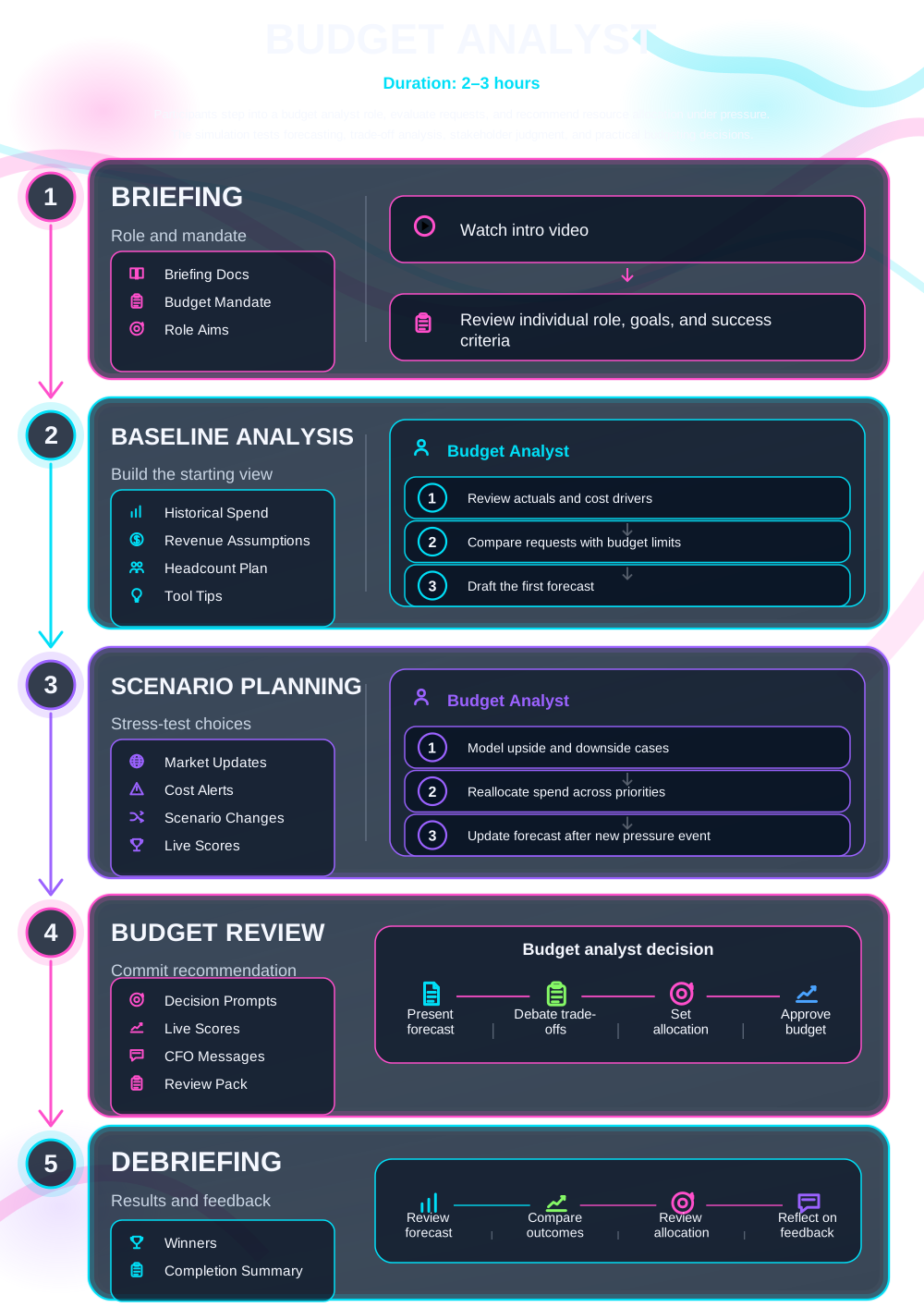

What Participants Do
In the simulation, participants will:
- Analyze detailed departmental budget requests and historical spending data.
- Conduct variance analysis to identify trends and anomalies.
- Comb through interviews with department heads to justify their requests.
- Evaluate different revenue enhancement and cost-cutting scenarios.
- Build a balanced budget proposal using a dynamic financial model.
- Present and defend their budget recommendations to a mock City Council, addressing their questions and concerns.
- Re-calibrate their proposal based on feedback and new economic data.

Learning Objectives
By the end of the simulation, participants will be able to:
- Interpret the key components of a public sector budget and financial statements.
- Apply both incremental and zero-based budgeting principles to real-world scenarios.
- Develop a strategic, balanced budget under strict fiscal constraints.
- Evaluate the trade-offs between funding different public services and programs.
- Construct a compelling narrative to justify budgetary decisions to stakeholders.
- Utilize quantitative and qualitative data to support funding recommendations.
How the Budget Analyst Simulation Works
This simulation can be run individually or in teams in academic or corporate contexts. Each cycle represents a stage of getting through a pressing financial situation.
1. Introduction and Data Review Participants receive the "Mayor's Budget Directive" and dive into the city's financials and department requests.
2. Analysis and Scenarios Using the simulation's dashboard, participants analyze data, run different scenarios (2% across-the-board cuts vs. targeted strategic cuts), and see the impact on the budget gap and key performance indicators.
3. Stakeholder Negotiation Participants receive input and pushback from various stakeholders, forcing them to prioritize and refine their strategy.
4. Proposal Submission Each participant or team submits their final balanced budget proposal and a written justification memo.
5. Council Presentation and Debrief In a culminating phase, participants present their budget highlights and are questioned by the mock council. A detailed debrief compares their choices against benchmarks and best practices.
Frequently Asked Questions
Assessment
Assessment of participant performance can be tailored according to the host institution’s objectives (business school, corporate training, assessment centre). Typical assessment criteria include:
- Budget Accuracy
- Gap Closure
- Scenario Analysis
- Strategic Thinking
- Analytical Rigor
- Communication and Persuasion