It's ideal for participants interested in corporate banking, leveraged finance, private equity, corporate development, or treasury roles.

Bridge Finance Simulation
In this Bridge Finance Simulation, participants step into the world of short-term corporate lending: acting as both lenders and borrowers to secure capital for strategic opportunities, navigate urgent refinancing, and manage liquidity under pressure.

Bridge Finance Simulation Overview
Participants are immersed in the fast-paced environment of bridge financing, a critical tool for corporate finance and private equity. Acting as lending officers at specialized finance institutions or as corporate treasurers and CFOs seeking urgent capital, they engage in structuring, pricing, and negotiating short-term loan facilities.
Each simulation round presents a new, time-sensitive corporate scenario: funding an acquisition ahead of permanent financing, covering a sudden cash flow gap, or capitalizing on a time-bound investment opportunity. Participants must analyze company financials, assess collateral, model repayment feasibility from exit strategies, and negotiate key terms like interest margins, fees, and covenants. The simulation captures the tension between risk and reward, emphasizing credit analysis, relationship management, and strategic deal-making under tight deadlines.
This simulation is ideal for MBA programs, corporate banking training, and private equity workshops. It demystifies the niche but vital bridge loan market, showing how these instruments unlock deal value and manage corporate liquidity in real-world transactions.

Bridge Finance Simulation Concepts
Participants work through realistic scenarios, which can be customized to emphasize or exclude specific topics depending on the learning goals. This modular structure allows the simulation to be tailored to any type of session. Key concepts include:
- Purpose and characteristics of bridge loans
- Structuring loans around exit strategies
- Credit risk analysis for short-term, high-exposure facilities
- Pricing bridge loans: interest margins, upfront fees, and commitment charges
- Legal covenants and collateral packages
- The interplay between bridge financing and broader capital structure
- Syndication strategies and relationship management
- Managing refinancing risk and borrower liquidity crises
- Ethical considerations in high-pressure lending
- Exit plan evaluation and contingency analysis

Gameflow

What Participants Do
In the simulation, participants will:
- Analyze borrower financials and the strategic rationale for bridge financing.
- Structure proposed loan terms, including amount, tenure, pricing, and security.
- Model cash flows and evaluate the credibility of the proposed exit strategy.
- Negotiate directly with counterparties (lenders or borrowers) to secure favorable terms.
- Make strategic concessions on terms to win deals while protecting their institution's interests.
- Respond to unexpected market or company-specific shocks that impact creditworthiness.
- Present and justify their final deal terms to a credit committee or board.
- Reflect on the long-term sustainability and risks of the closed transaction.

Learning Objectives
By the end of the simulation, participants will be able to:
- Understand the strategic role and mechanics of bridge finance in corporate transactions.
- Apply fundamental credit analysis specifically to short-term, high-risk loan requests.
- Structure and price a bridge loan facility, aligning terms with exit strategy risk.
- Negotiate effectively from the perspective of both a lender and a borrower.
- Evaluate and mitigate key risks, including refinancing risk and market volatility.
- Make informed, ethical decisions under time pressure and information asymmetry.
- Communicate deal rationale and risk assessment clearly to stakeholders.
- Appreciate the relationship between bridge loans and the broader capital markets.
How the Bridge Finance Simulation Works
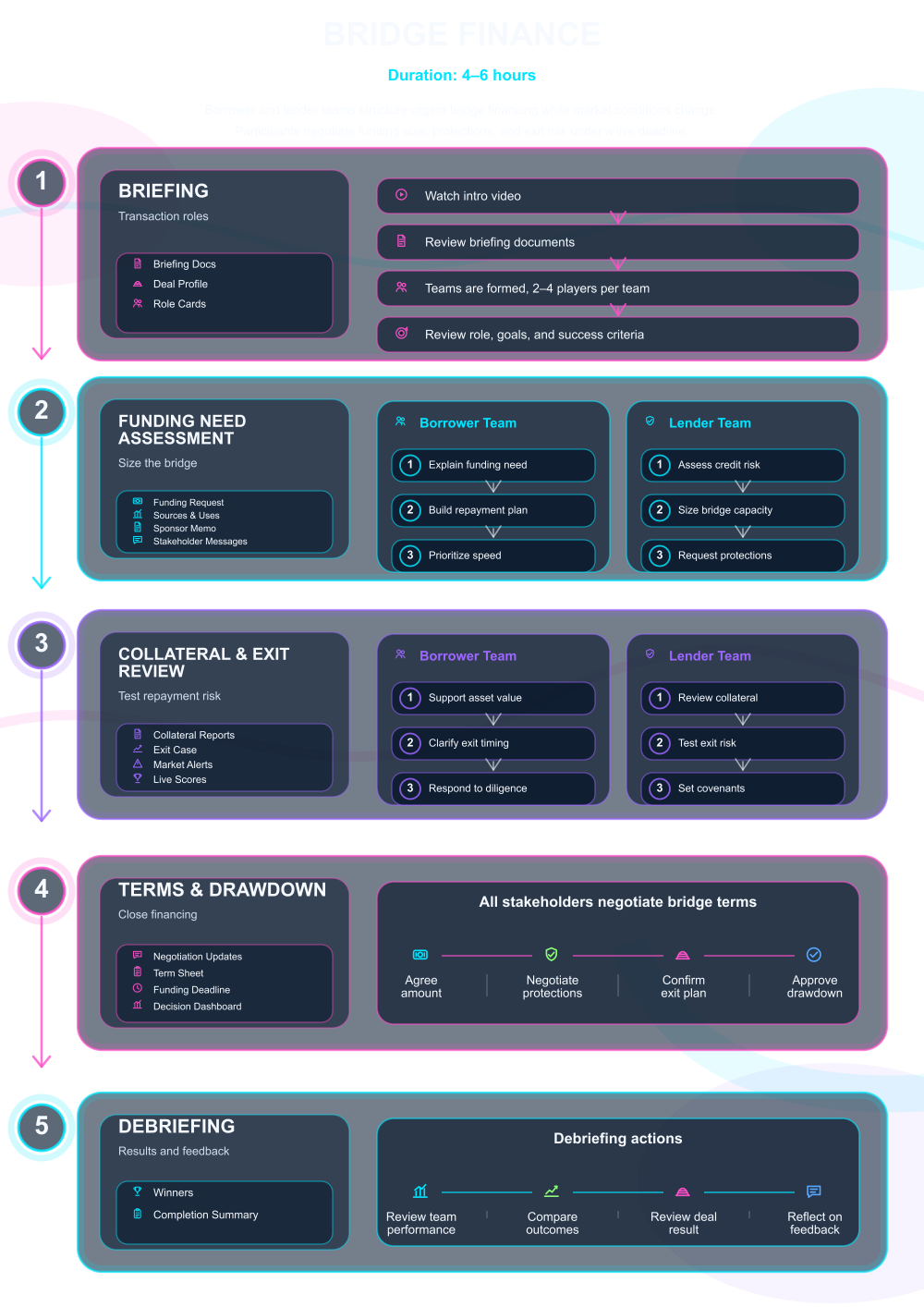
This simulation can be run individually or in teams in academic or corporate contexts. Each cycle represents a stage of getting through a pressing financial situation.
1. Role Assignment and Briefing Teams are assigned as either Lenders or Borrowers. They receive confidential briefs with their goals, constraints, and financial data.
** 2. Analysis and Preparation** Lenders perform credit analysis on the borrower. Borrowers model their needs and optimal terms. Both sides develop their negotiation strategy.
3. Structuring and Negotiation Rounds Teams engage in direct, timed negotiations. They exchange term sheets, debate pricing and covenants, and work towards a mutually agreeable structure.
4. Deal Closure and Submission Final agreed-upon terms are submitted into the simulator platform.
5. Review and Reflection The simulator provides instant feedback on the deal's quality, pricing adequacy, and risk level. A facilitator-led debrief compares outcomes across teams, highlighting successful strategies and key learning points.
Frequently Asked Questions
Assessment
Assessment of participant performance can be tailored according to the host institution’s objectives (business school, corporate training, assessment centre). Typical assessment criteria include:
- The financial soundness and risk-adjusted profitability of their final loan structure.
- The depth and insight of their credit and exit strategy analysis.
- Their effectiveness and adaptability during the negotiation process.
- The clarity and persuasiveness of their final deal rationale or credit committee memo.
- Team collaboration and strategic decision-making under constraints.