It's ideal for anyone seeking practical bookkeeping skills, including accounting students, career-changers, small business owners, and finance team members needing a refresher.

Bookkeeping Simulation
In this Bookkeeping Simulation, participants master the complete accounting cycle. From recording daily transactions to preparing financial statements, all while navigating realistic business scenarios that test their accuracy, judgment, and adaptability.

Bookkeeping Simulation Overview
Participants immerse themselves in the operational reality of managing the books for a simulated company. Each decision-making round introduces authentic financial events: processing sales and purchases, managing payroll, handling adjustments, and correcting errors. The simulation emphasizes the cause-and-effect relationship between daily bookkeeping entries and the company’s ultimate financial health, moving beyond theory to applied practice.
This dynamic environment replicates the pressures and deadlines of a real bookkeeping role. Participants must interpret source documents, apply double-entry principles, and ensure compliance with accounting standards.
The simulation is ideal for vocational training programs, undergraduate accounting courses, and corporate finance workshops, providing a safe space to build confidence and competence in foundational accounting skills.

Bookkeeping Simulation Concepts
Participants work through realistic scenarios, which can be customized to emphasize or exclude specific topics depending on the learning goals. This modular structure allows the simulation to be tailored to any type of session. Key concepts include:
- The Accounting Equation and Double-Entry Bookkeeping
- The Complete Accounting Cycle (from Journal to Financial Statements)
- Processing and Categorizing Transactions (Sales, Purchases, Expenses)
- Accounts Receivable and Accounts Payable Management
- Payroll Accounting and Accruals
- Bank Reconciliation Processes
- Adjusting Entries (Prepayments and Accruals)
- Correcting Accounting Errors
- Trial Balance Preparation and Analysis
- Creating Key Financial Statements (Income Statement, Balance Sheet)
- Internal Controls for Fraud Prevention
- Basic Financial Ratio Analysis for Business Insight

Gameflow
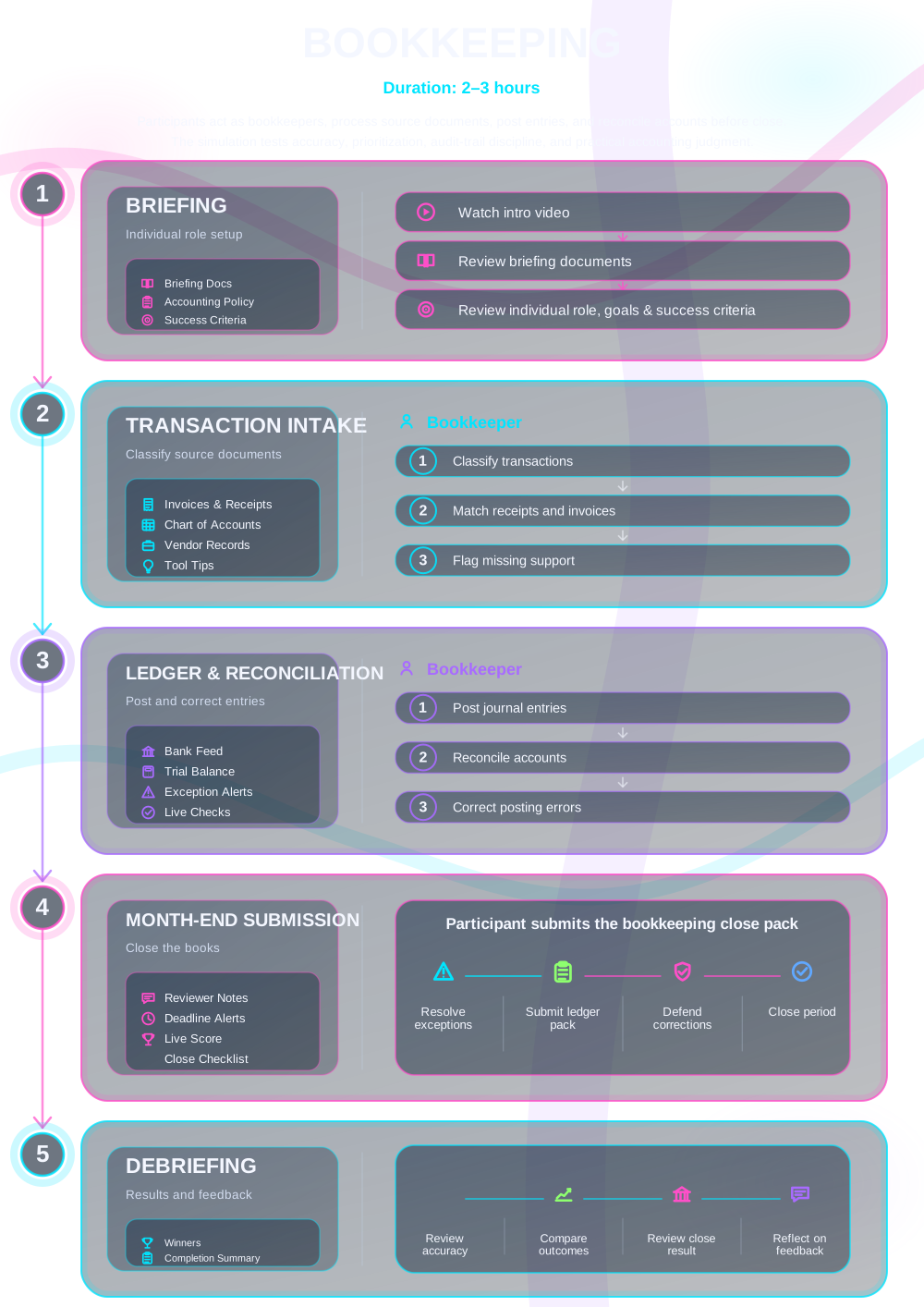

What Participants Do
In the simulation, participants will:
- Analyze and record business transactions from source documents into journals.
- Post entries to the general ledger and maintain subsidiary ledgers.
- Perform end-of-period bank reconciliations.
- Calculate and post adjusting entries for accruals and deferrals.
- Identify, investigate, and correct bookkeeping discrepancies.
- Prepare an adjusted trial balance and key financial statements.
- Interpret financial results to answer management queries.
- Implement basic internal control measures to safeguard assets.

Learning Objectives
By the end of the simulation, participants will be able to:
- Execute the full accounting cycle with accuracy and confidence.
- Apply double-entry bookkeeping principles to real-world transactions.
- Demonstrate the ability to manage core bookkeeping functions like AP/AR and payroll.
- Prepare and analyze a trial balance, identifying potential errors.
- Generate accurate Income Statements and Balance Sheets from ledger data.
- Appreciate the importance of internal controls and compliance in financial record-keeping.
- Develop professional judgment in classifying and recording complex transactions.
- Communicate financial information clearly to stakeholders.
How the Bookkeeping Simulation Works
This simulation can be run individually or in teams in academic or corporate contexts. Each cycle represents a stage of getting through a pressing financial situation.
1. Receive the Business Scenario Participants are introduced to a company, its chart of accounts, and opening balances.
** 2. Analyze Transactional Data** Each round, they receive batches of source documents (invoices, receipts, bank statements) to analyze.
3. Make Recording Decisions Participants record transactions in journals, post to ledgers, and make necessary calculations.
4. Perform Period-End Tasks They complete reconciliations, prepare adjusting entries, and close the books.
5. Report and Communicate The cycle culminates in the preparation of financial statements and a summary report for management.
6. Review and Adapt Feedback highlights accuracy, the impact of errors on financials, and areas for improvement, allowing for applied learning in subsequent rounds.
Frequently Asked Questions
Assessment
Assessment of participant performance can be tailored according to the host institution’s objectives (business school, corporate training, assessment centre). Typical assessment criteria include:
- Correct application of debit/credit rules and account classification.
- Accuracy and completeness of the final Income Statement and Balance Sheet.
- Successful completion of key processes like bank reconciliation and error correction.
- Ability to interpret financial results and answer scenario-based questions.
- Managing the bookkeeping workflow within realistic time constraints.