This simulation is ideal for finance students (BSc, MSc, MBA), professionals in banking or asset management, and anyone seeking to understand the dynamics of fixed-income markets through hands-on experience.

Bond Market Simulation
In this Bond Market Simulation, participants step into the roles of traders, portfolio managers, and underwriters. They navigate interest rate shifts, credit spreads, and economic cycles to price, trade, and manage fixed-income portfolios.

Bond Market Simulation Overview
Participants immerse themselves in the multi-trillion-dollar global bond market, where they make critical decisions as buy-side asset managers, sell-side traders, or investment bankers. The simulation replicates a dynamic economic landscape where interest rates fluctuate, credit ratings change, and geopolitical events trigger market volatility.
Each round introduces new data (central bank announcements), inflation reports, or corporate earnings, requiring swift analysis and strategic repositioning of bond portfolios.
It is designed for university finance programs, MBA courses, executive education, and corporate training sessions within banks and asset management firms. The simulation emphasizes the interconnectedness of macroeconomic factors, issuer fundamentals, and market technicals in determining bond prices and yields.

Bond Market Simulation Concepts
Participants work through realistic scenarios, which can be customized to emphasize or exclude specific topics depending on the learning goals. This modular structure allows the simulation to be tailored to any type of session. Key concepts include:
- Bond valuation and yield curve analysis
- Interest rate risk and duration management
- Credit analysis and spread dynamics
- Primary market issuance
- Secondary market trading
- Inflation-linked and sovereign bonds
- Portfolio construction and strategy
- Macroeconomic indicators
- Risk-return metrics
- Regulatory capital and compliance

Gameflow
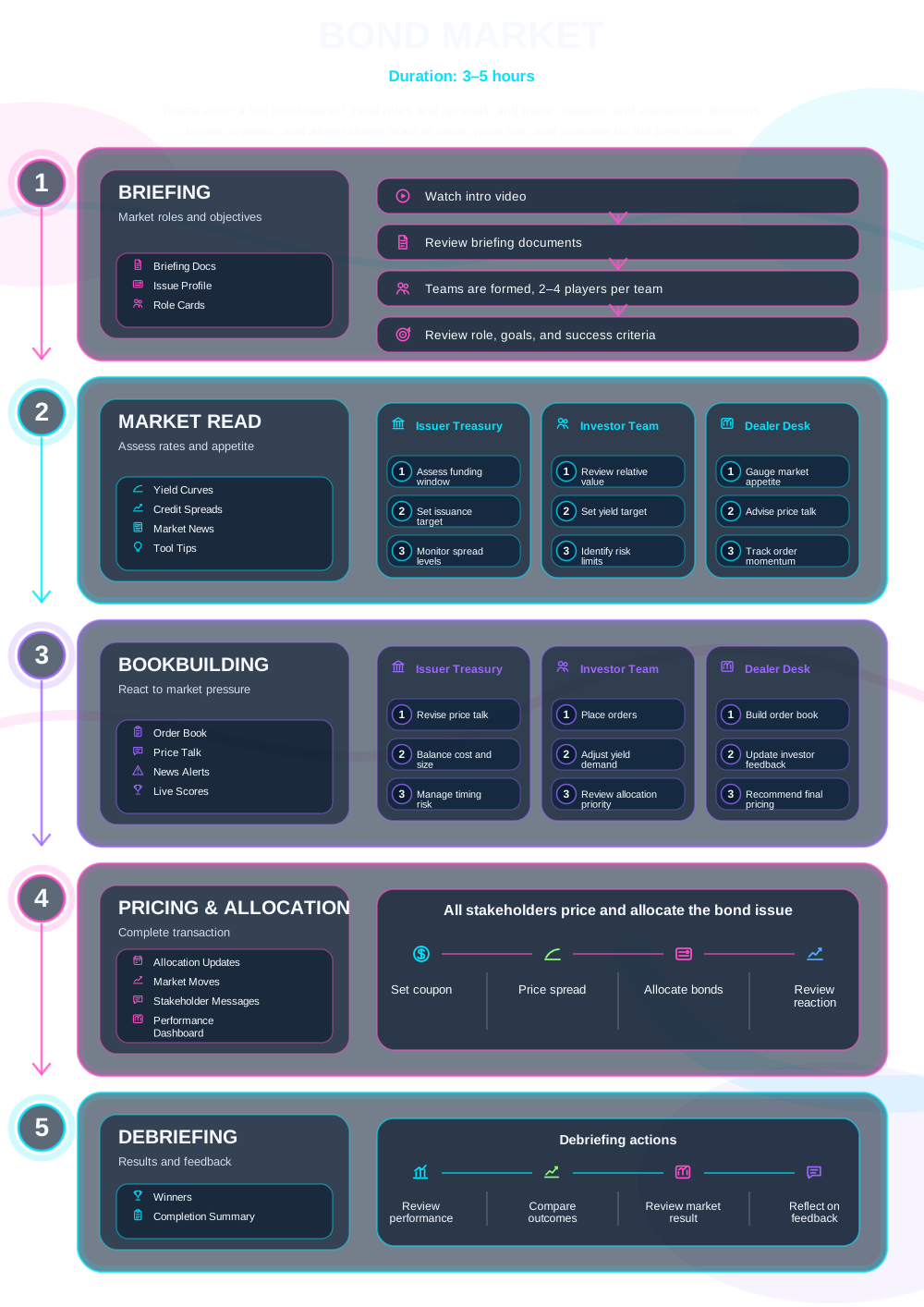

What Participants Do
In the simulation, participants will:
- Analyze live economic data and news feeds to forecast interest rate movements.
- Price new corporate bond issuances in a competitive book-building process.
- Execute trades in the secondary market across government, corporate, and emerging market bonds.
- Actively manage a bond portfolio, adjusting duration, credit exposure, and yield curve positioning.
- Hedge portfolio risks using interest rate swaps and futures.
- Negotiate terms with other teams acting as issuers, investors, or counterparties.
- Present portfolio performance and strategy rationale to a simulated investment committee.
- Adapt strategies in response to simulated market shocks like a sudden downgrade or liquidity crisis.

Learning Objectives
By the end of the simulation, participants will be able to:
- Apply core bond math and valuation techniques to price various fixed-income securities.
- Actively manage a bond portfolio’s interest rate risk (duration) and credit risk.
- Articulate how macroeconomic developments directly impact different segments of the bond market.
- Experience the complete lifecycle of a bond, from primary issuance to secondary trading.
- Evaluate the risk-return profile of a fixed-income portfolio using standard performance metrics.
- Develop and execute a coherent trading or investment strategy based on a market outlook.
- Communicate complex bond market concepts and portfolio decisions effectively to stakeholders.
- Build confidence in making time-sensitive financial decisions under conditions of uncertainty.
How the Bond Market Simulation Works
This simulation can be run individually or in teams in academic or corporate contexts. Each cycle represents a stage of getting through a pressing financial situation.
1. Market Briefing Participants receive an economic backdrop, current yield curves, and their firm's mandates.
** 2. Analysis and Strategy** Teams analyze data, form a market view, and decide on target duration, sector allocation, and specific securities to buy or sell.
3. Execution Participants enter orders in a simulated trading platform, compete in new issue auctions, and negotiate OTC trades.
4. Market Update and Re-assessment A new round begins with updated economic data, prompting teams to re-evaluate their positions and risk exposures.
5. Communication Teams justify their portfolio decisions and performance through a trader's note or a portfolio manager's update.
6. Debrief and Feedback Instructors and the platform provide scores based on risk-adjusted returns, strategy soundness, and communication clarity. The link between decisions and outcomes is made explicit.
Frequently Asked Questions
Assessment
Assessment of participant performance can be tailored according to the host institution’s objectives (business school, corporate training, assessment centre). Typical assessment criteria include:
- Risk-adjusted returns, excess returns vs. a benchmark, and drawdown control.
- Effectiveness of duration and credit risk hedging, and adherence to stated risk limits.
- Quality of market analysis and the logical connection between outlook and executed trades.
- Clarity and persuasiveness of investment committee updates or trader summaries.
- Peer and self-assessments on contribution, financial analysis, and decision-making processes.