It is ideal for students and professionals pursuing careers in M&A advisory, corporate development, private equity, or transactional law who need to understand the practical intricacies of asset transactions.

Asset Deal Simulation
In the Asset Deal Simulation, participants step into the high-stakes world of corporate acquisitions, navigating the complex process of buying and selling specific business assets rather than an entire company.

Asset Deal Simulation Overview
This simulation plunges participants into the nuanced arena of asset transactions, a common yet intricate alternative to stock purchases. Unlike a full company acquisition, an asset deal requires meticulous selection of desired assets (and liabilities), thorough due diligence, and careful structuring to align with strategic goals and regulatory frameworks.
Participants will assume the roles of either the buyer's or seller's advisory team. They will engage in a realistic, multi-round negotiation, starting from initial valuation and letter of intent through to intensive due diligence and final purchase agreement structuring. The dynamic environment introduces real-world complications such as hidden liabilities, competing bids, and shifting market conditions, challenging teams to adapt their strategy while protecting their client's interests.
This multiplayer simulation is crafted by seasoned M&A professionals and emphasizes critical thinking, financial analysis, negotiation tactics, and legal awareness. It is designed to reflect the pressure and collaborative nature of actual deal rooms, preparing participants for careers in investment banking, corporate development, private equity, and law.

Asset Deal Simulation Concepts
Participants work through realistic scenarios, which can be customized to emphasize or exclude specific topics depending on the learning goals. This modular structure allows the simulation to be tailored to any type of session. Key concepts include:
- Fundamental differences between asset deals and stock deals
- Strategic rationale for asset-based acquisitions
- Financial valuation of discrete business assets and liabilities
- Tax implications and structuring advantages of asset transactions
- Legal due diligence for assets
- Assumption and exclusion of liabilities in an asset purchase
- Drafting key terms in an Asset Purchase Agreement
- Negotiation of working capital and other purchase price adjustments
- Managing employee transfers and related HR considerations
- Integration planning for acquired assets

Gameflow
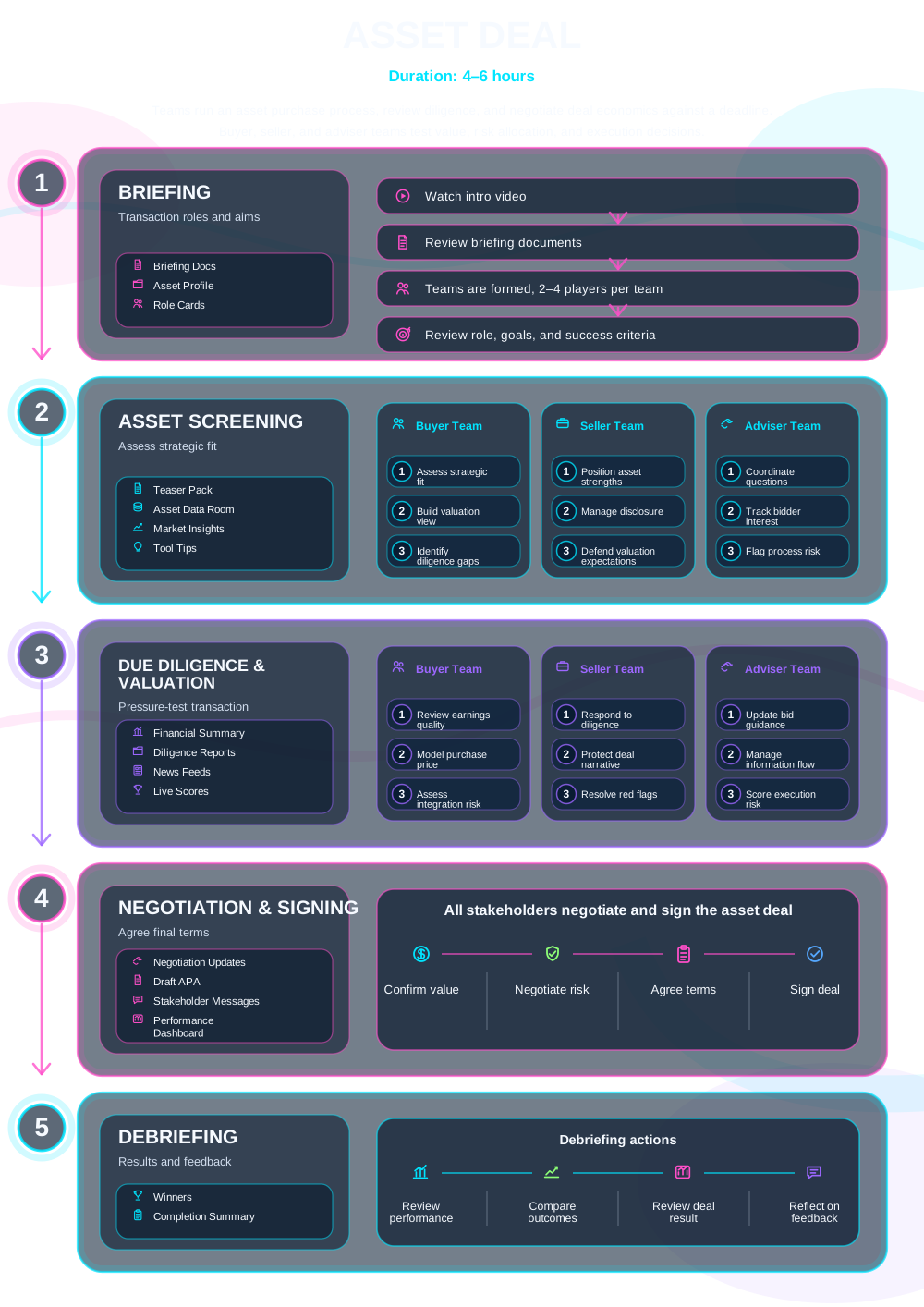

What Participants Do
In the simulation, participants will:
- Review confidential information memorandums (CIM) and financials for a specific business unit.
- Build a financial model to determine a valuation range for the selected assets.
- Formulate a negotiation strategy as either buyer or seller, identifying must-haves and trade-offs.
- Negotiate key binding and non-binding terms in a Letter of Intent.
- Uncover potential deal-breakers or value-adjusting items in a simulated data room.
- Negotiate critical sections of the final Asset Purchase Agreement.
- Calculate and agree on final purchase price based on closing balance sheets.
- Defend their deal terms and strategic choices in a final debrief.

Learning Objectives
By the end of the simulation, participants will be able to:
- Articulate the strategic, financial, and legal drivers behind choosing an asset deal structure.
- Identify and value key assets (tangible and intangible) and liabilities in a transaction.
- Navigate the key stages of an asset deal from LOI through to closing.
- Understand and mitigate risks through diligent APA drafting and negotiation.
- Evaluate the tax and accounting consequences of an asset purchase.
- Develop effective negotiation tactics tailored to asset deal complexities.
- Collaborate under pressure within a multidisciplinary advisory team.
- Communicate deal rationale and terms clearly to a client or stakeholder.
How the Asset Deal Simulation Works
This simulation can be run individually or in teams in academic or corporate contexts. Each cycle represents a stage of getting through a pressing financial situation.
1. Team Formation and Role Assignment Participants are divided into buyer and seller teams, each receiving confidential briefs outlining their client's goals, constraints, and risk appetite.
** 2. Initial Analysis and Valuation** Teams analyze the target business unit, build a valuation model, and develop their initial negotiation position.
3. LOI Negotiation Round Teams engage in structured negotiations to agree on core deal terms like price range, included/excluded assets, and a due diligence timeline.
4. Due Diligence Phase Teams access a virtual data room, discovering new information that may impact valuation and risk assessment.
5. APA Negotiation Round Based on due diligence findings, teams negotiate the detailed, binding terms of the Asset Purchase Agreement.
6. Closing and Final Calculation The deal closes, and the simulator calculates the final outcome based on negotiated adjustments.
7. Comprehensive Debrief Teams review their financial outcomes, negotiation effectiveness, and strategic decisions. The facilitator leads a discussion linking the experience to core theoretical concepts.
Frequently Asked Questions
Assessment
Assessment of participant performance can be tailored according to the host institution’s objectives (business school, corporate training, assessment centre). Typical assessment criteria include:
- Final purchase price vs. target, quality of negotiated adjustments (working capital, indemnities), overall value created for the client.
- Effectiveness in achieving defined strategic goals.
- Ability to secure favorable terms in the LOI and APA, adaptability during due diligence, efficiency in closing the deal.
- Accuracy and logic of asset valuation, thoroughness in assessing due diligence findings.
- Clarity and persuasiveness in internal strategy discussions and, if included, final client presentations. Peer and self-assessment tools can be integrated to evaluate teamwork.