It's ideal for students and professionals in corporate finance, accounting, auditing, tax advisory, and corporate development who need to understand the intricacies of intercompany and related-party dealings.

Affiliated Companies Simulation
In this Affiliated Companies Simulation, participants step into the complex world of corporate relationships, acting as senior managers or financial strategists navigating transactions and strategic decisions between interconnected companies.

Affiliated Companies Simulation Overview
The Affiliated Companies Simulation is a dynamic, realistic business simulation developed by corporate finance and accounting professionals. It immerses participants in the unique challenges of managing and transacting with related parties: sister companies, subsidiaries, joint ventures, and parent organizations, within a larger corporate group.
Participants encounter scenarios that mirror real-world complexities: they must design intercompany agreements, conduct internal transactions at arm's length, prepare consolidated financial statements, and manage the strategic interests of different stakeholders within the corporate family. Balance synergies with independence, manage transfer pricing, evaluate fair value, and comply with intricate regulatory frameworks, all while working to maximize the strategic and financial value of the corporate group.
The simulation emphasizes the delicate balance between leveraging group synergies for competitive advantage and maintaining proper governance, compliance, and financial transparency as required by regulators and investors. It is ideally suited for university programs in accounting and finance, executive training in corporate development, and professional workshops for auditors and financial controllers.

Affiliated Companies Simulation Concepts
Participants work through realistic scenarios, which can be customized to emphasize or exclude specific topics depending on the learning goals. This modular structure allows the simulation to be tailored to any type of session. Key concepts include:
- Related-party transaction identification and governance
- Transfer pricing methodologies and documentation
- Fair value measurement for intercompany assets and services
- Consolidation accounting and non-controlling interests
- Arm's length principle and regulatory compliance
- Strategic rationale for affiliate structures and joint ventures
- Tax implications and planning for affiliated entities
- Financial reporting transparency and disclosure requirements
- Managing conflicts of interest within corporate groups
- Performance evaluation and resource allocation across subsidiaries

Gameflow
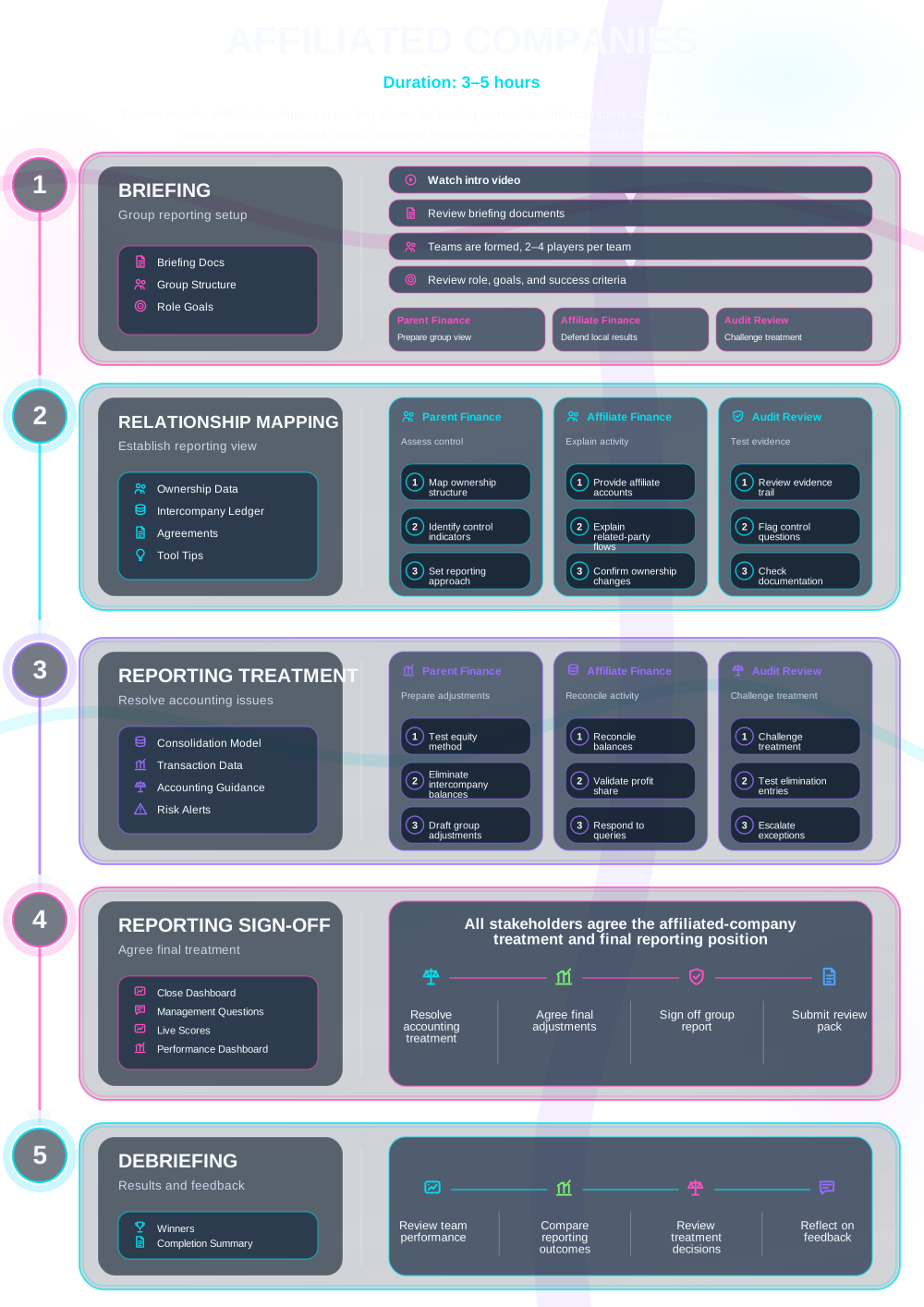

What Participants Do
In the simulation, participants will:
- Analyze corporate structures to identify related parties and potential conflicts.
- Design and negotiate intercompany agreements, including service level agreements and transfer prices.
- Perform financial analysis to evaluate the fairness and strategic value of internal transactions.
- Prepare and review segments of consolidated financial statements.
- Navigate regulatory scenarios involving tax authorities or audit inquiries.
- Develop strategies to optimize group-wide performance while complying with governance standards.
- Present and defend their intercompany policies and financial outcomes to a simulated board or audit committee.

Learning Objectives
By the end of the simulation, participants will be able to:
- Understand the definitions and governance challenges of related-party relationships.
- Apply core transfer pricing principles and methods to intercompany transactions.
- Recognize the financial reporting and consolidation implications of affiliated company dealings.
- Evaluate the strategic benefits and risks of different affiliated company structures.
- Navigate the key regulatory and compliance requirements governing related-party transactions.
- Analyze the impact of intercompany deals on group profitability, cash flow, and tax position.
- Develop and document policies that support both strategic synergy and financial integrity.
- Communicate complex affiliate-related decisions clearly to internal and external stakeholders.
- Build confidence in managing the financial and strategic dimensions of corporate groups.
How the Affiliated Companies Simulation Works
This simulation can be run individually or in teams in academic or corporate contexts. Each cycle represents a stage of getting through a pressing financial situation.
1. Receive a Scenario Brief Participants are introduced to a corporate group structure, its strategic goals, and a specific challenge (setting a new transfer price, evaluating an internal asset sale).
** 2. Analyze the Situation** They review financial data, organizational charts, regulatory guidelines, and market benchmarks.
3. Make Strategic and Financial Decisions Participants determine transaction terms, select appropriate valuation methods, and draft supporting documentation.
4. Collaborate Across Roles Teams may act as the management of different subsidiaries, the group HQ, internal audit, or external advisors, requiring negotiation and alignment.
5. Communicate Outcomes Participants deliver their proposals, financial reports, or compliance documentation to a simulated authority.
6. Review and Reflect Instant feedback highlights the financial impact, compliance score, and strategic effectiveness of their decisions, guiding strategy evolution across multiple rounds.
Frequently Asked Questions
Assessment
Assessment of participant performance can be tailored according to the host institution’s objectives (business school, corporate training, assessment centre). Typical assessment criteria include:
- Correct use of transfer pricing methods, accurate consolidation adjustments, and proper financial disclosure.
- The financial and synergistic results achieved for the corporate group (optimized group profit, effective tax rate, cash flow efficiency).
- Adherence to the arm's length principle, quality of supporting documentation, and robustness of internal controls.
- Clarity and persuasiveness in presenting and defending intercompany policies to stakeholders.
- Effectiveness in reaching agreements that satisfy the needs of different affiliated entities within the group's overall framework.